
Kigumi
Rebuild the old system beside itself.
About
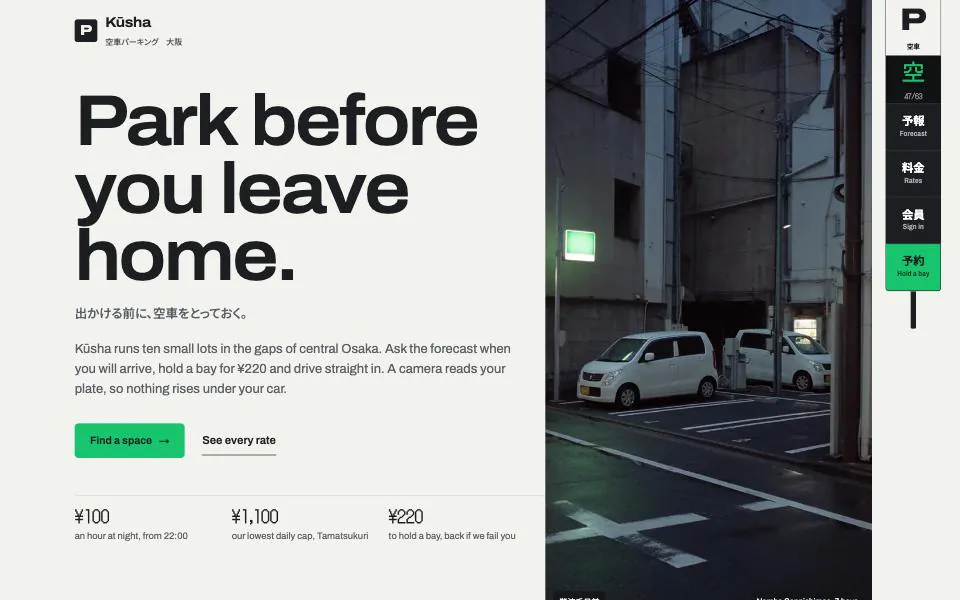
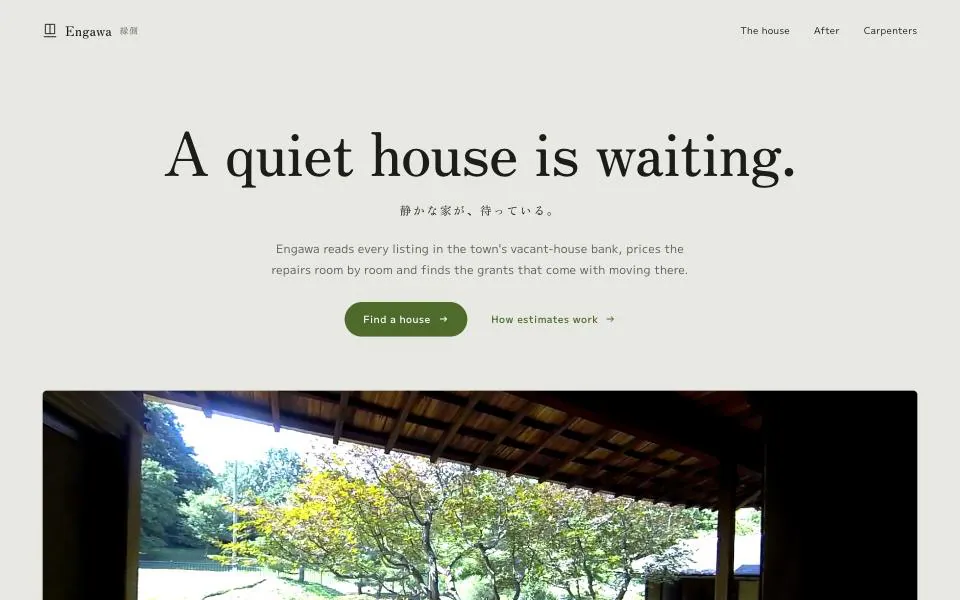
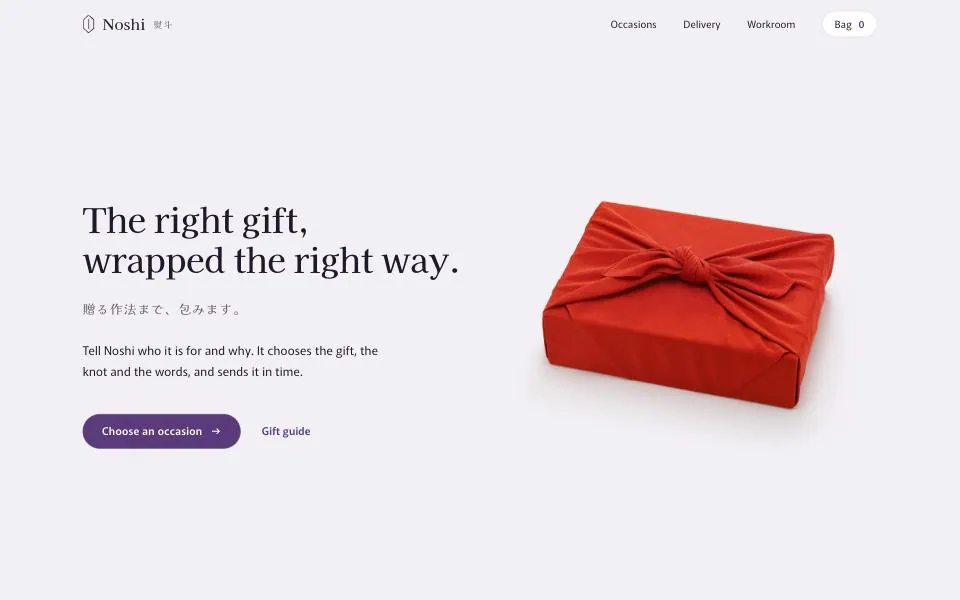
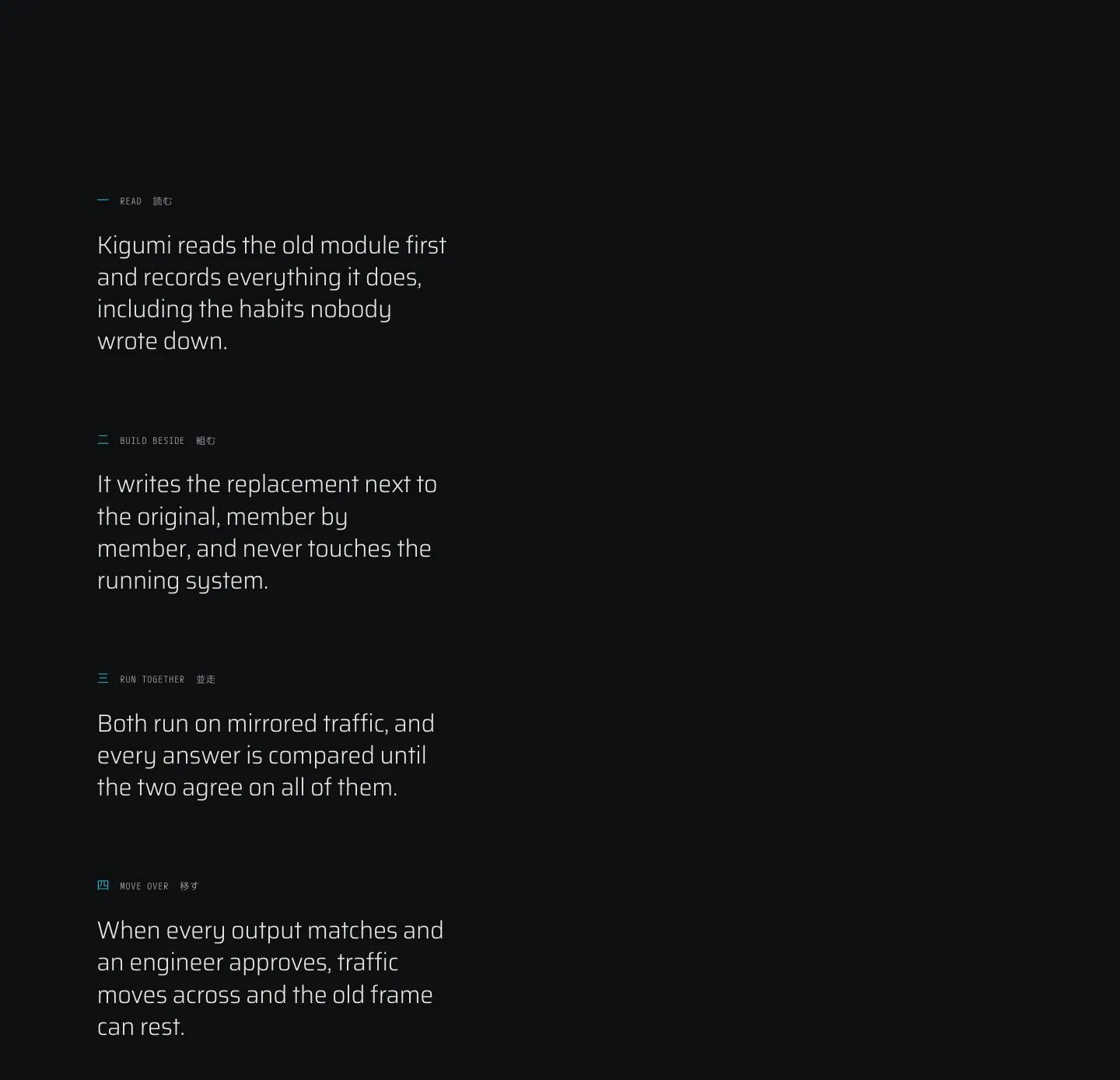
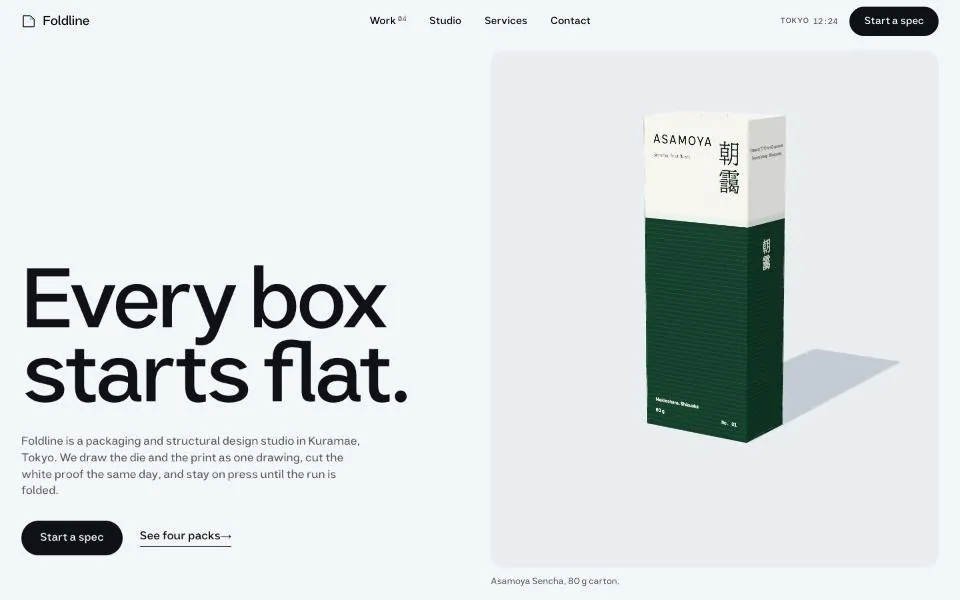
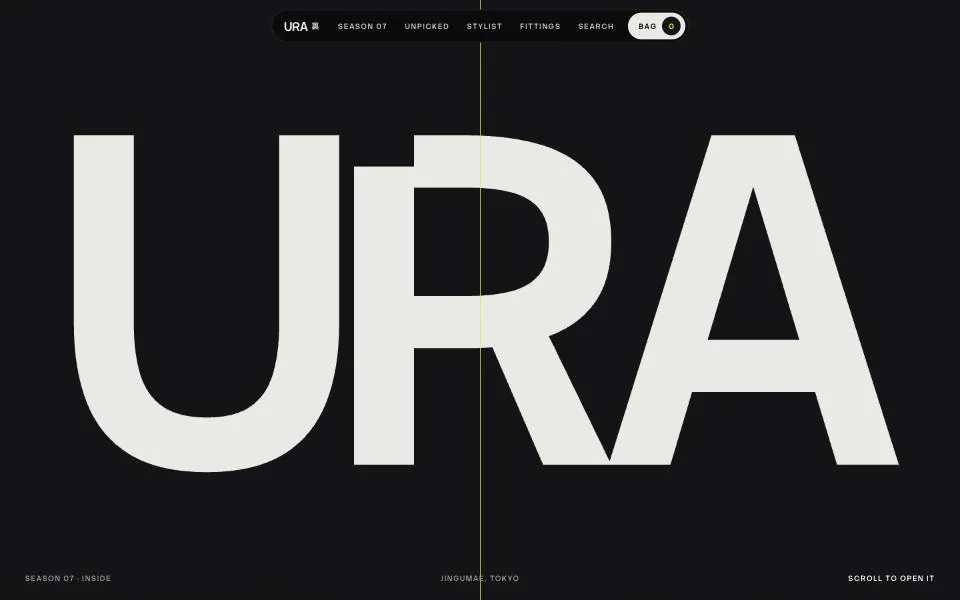
Kigumi is a concept for engineering leads, developers and CTOs at software companies. Reads a legacy codebase module by module, writes the replacement beside it, runs both on mirrored traffic until every output matches, and moves each module over only when an engineer approves. It belongs to the Japan experience flavor of Japan: six Japanese design cultures, one page each: carpentry drawings, office seals, morning light, court colours, gift wrapping and quiet country houses.
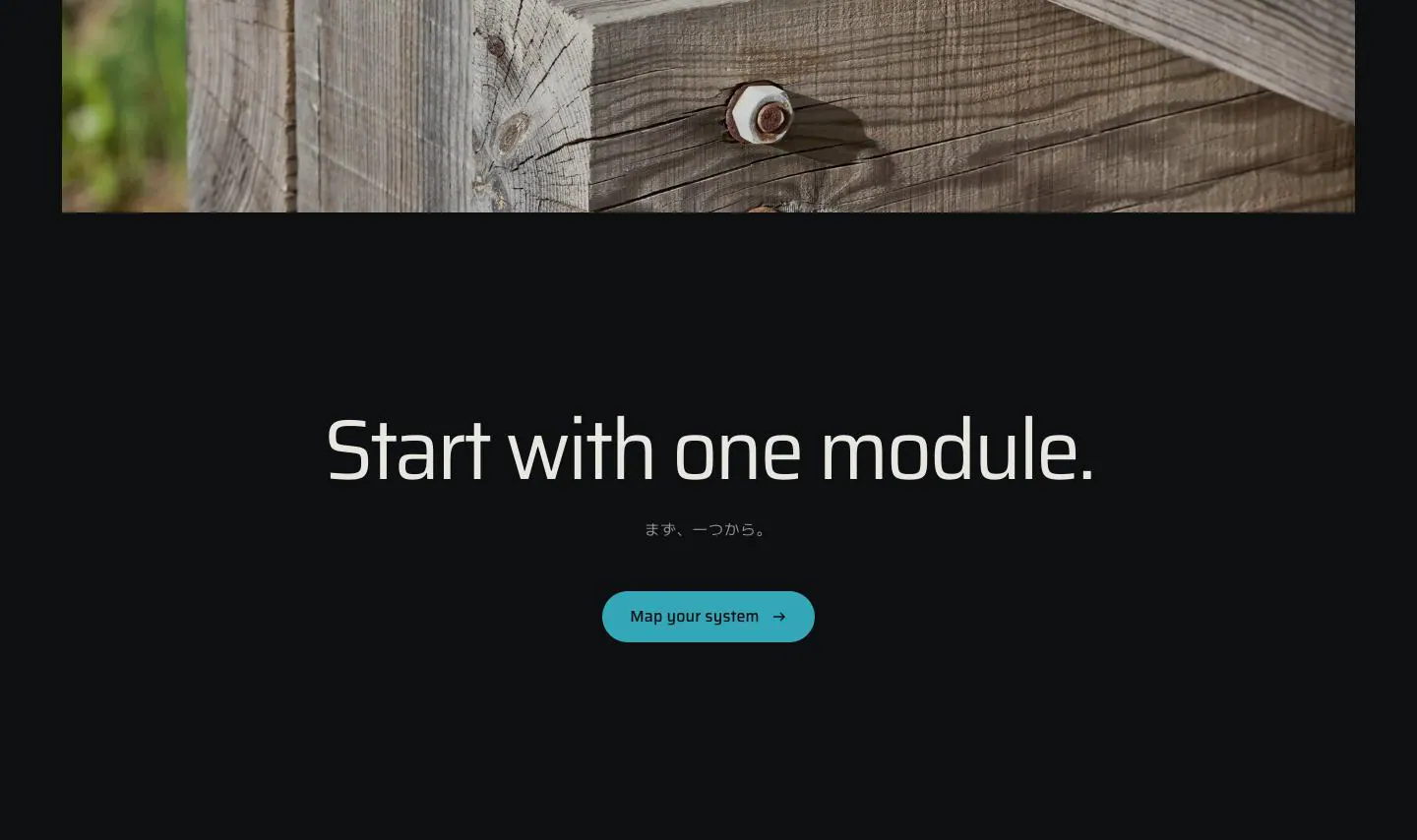
- 01Signature interactionA pinned isometric drawing builds the new module beam by beam beside the old one while a match meter climbs to 100%, then the old frame dims and the new one turns solid.
- 02LayoutNear-black canvas, crisp 1px borders, dense product UI, tight type. No glow, no glass, no gradient text.
- 03MotionUI panels assemble as you scroll: rows slide in, numbers tick, a cursor demonstrates the product.
Use it
Pick the parts you want and paste one prompt. Use rebuilds this page, Remix writes it for your brand.
Prompt payload
Add an icon set, animation and polish, then copy the prompt or download it with DESIGN.md and the HTML. Nothing is generated here: you paste it into Claude, Cursor, v0 or Lovable.
Questions
How do I use this page?
Open the payload builder with Use, pick what to include, then copy the prompt or download the .zip. Paste the prompt into Claude, Cursor, v0, Lovable or Bolt and attach the files. The tool rebuilds Kigumi as your starting point.
What is the difference between Use and Remix?
Use rebuilds Kigumi as it is. Remix keeps the layout and the signature interaction but writes the brief for your own brand and one-liner.
Is this page really free?
Yes. The prompt, DESIGN.md and starter kit are free. The page HTML is part of Pro on every page.
Can I use the photos and videos?
No. Media on the live page is licensed for this showcase only. The source download keeps every page, stylesheet, script and font as served, and puts a placeholder of the same size at each photo and video path, so you drop in your own.
How many tokens does this save?
About 52k on this page. Estimate. Page code at 3.6 characters per token. From scratch: a first draft and three full rewrites. From Herofold: the model reads the code once, rewrites about a fifth of it, and reads a payload prompt of about 1,500 tokens.
Who made it?
Herofold Studio. Every brand on Herofold is a concept; swap in your own names, numbers and quotes before you publish.
Blocks
Take one section of this page
Japan
More in Japan experience
Related