Bench letter footer
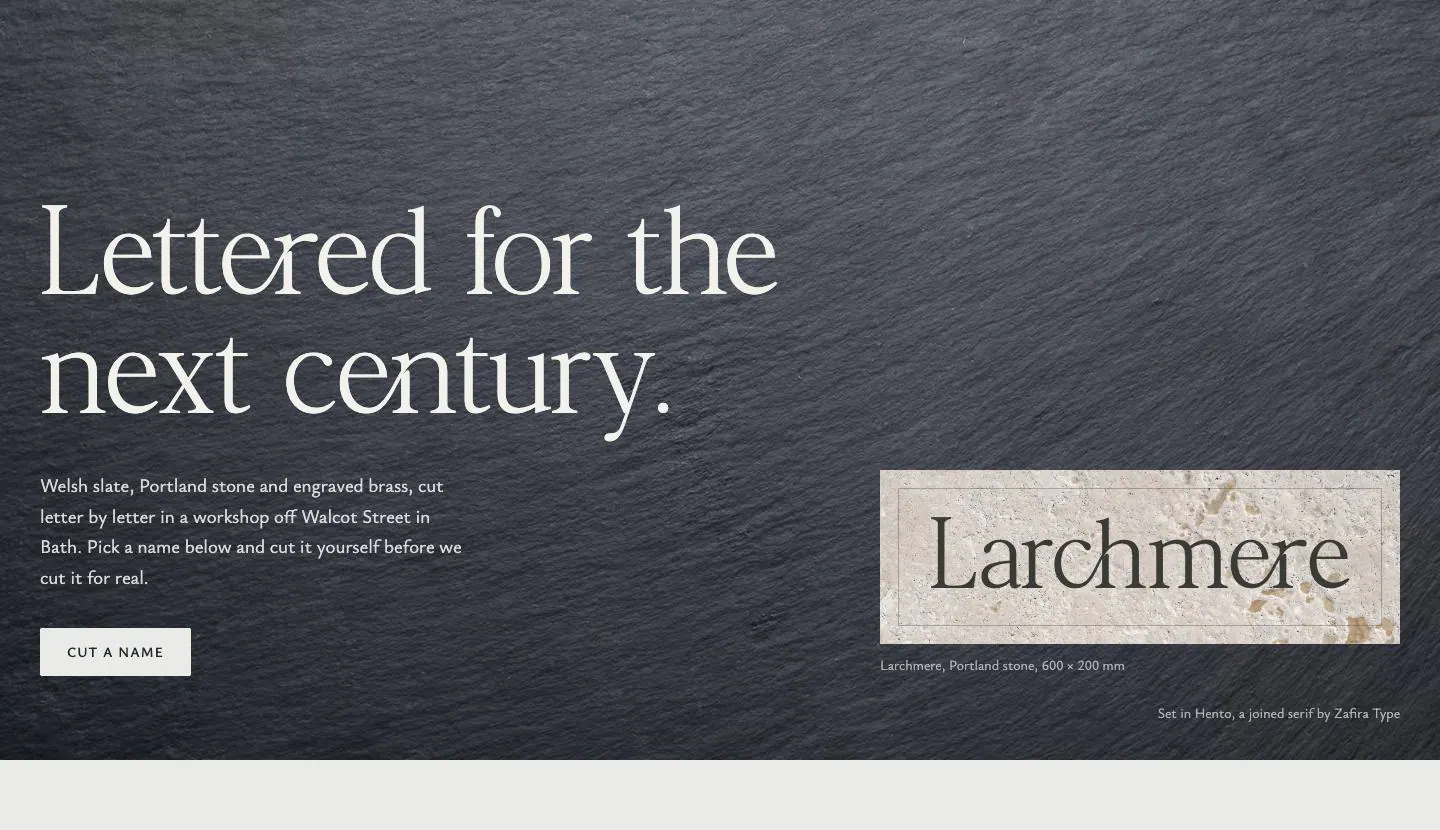
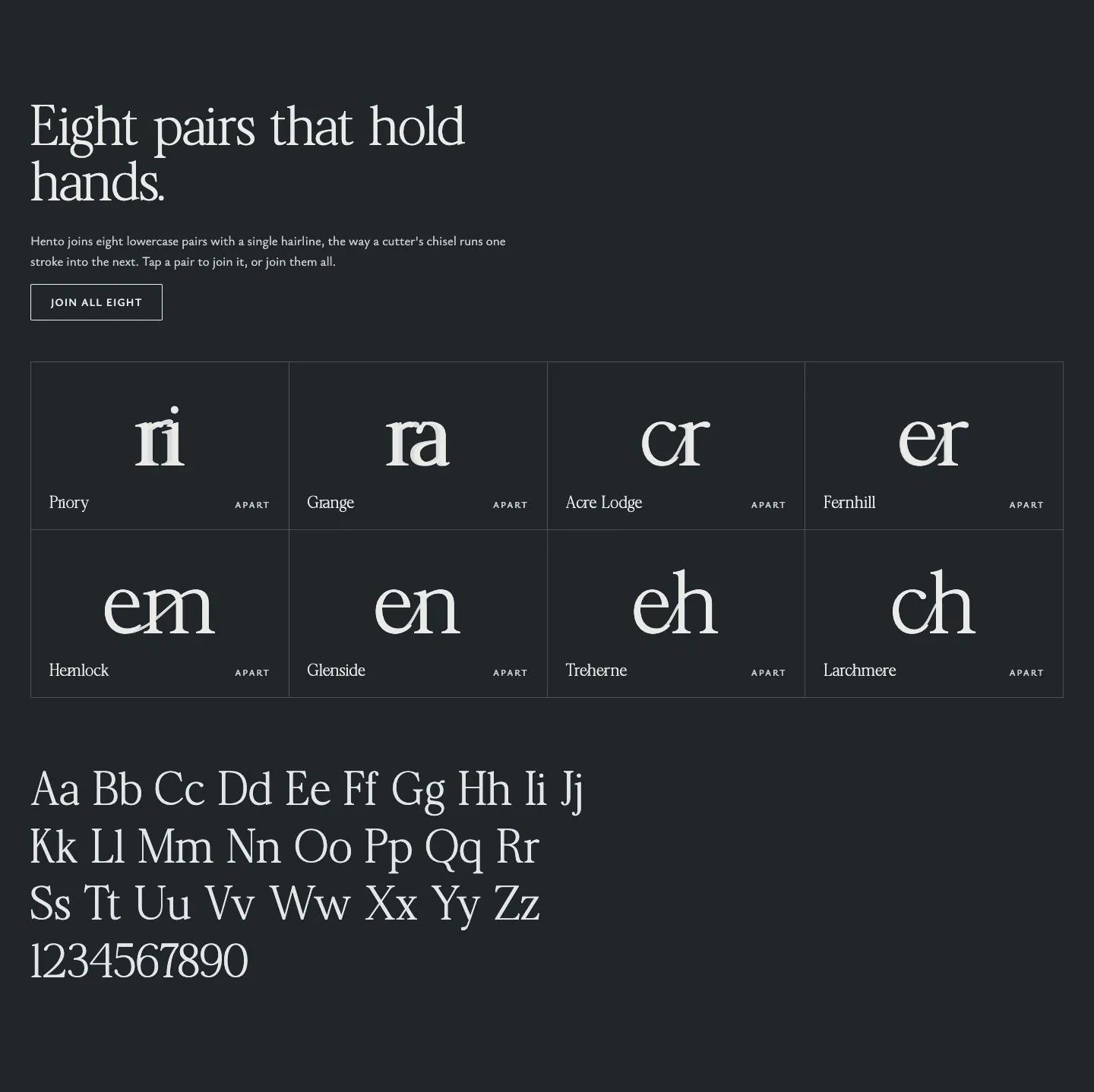
A slate footer with a quarterly letter sign-up in the joined serif, visit and help columns, and a credits line for the typeface and photos.
Links in the preview stay on the block.
Open on its ownThe prompt
One prompt, written to stand on its own: goal, structure, type, colour, spacing, behaviour and the words in square brackets to replace. Paste it into any tool that writes HTML. The Code tab has this block as one file.
514 words
# Bench letter footer

One footer section, not a whole page: build it to drop into a page that already exists. Works in Claude, v0, Lovable, Bolt, Cursor or any tool that writes HTML.

## Goal
A footer for a craft studio that offers a slow, quarterly letter and the practical facts of visiting.

## Structure
1. two columns, seven parts and five parts
2. left: serif heading, one sentence, the email form (caps label, square input and light button on one row, status line)
3. right: two short columns, Visit and Help, under small caps labels
4. full-width base line with credit notes under a rule

## Type
Heading Hento 400 clamp(32px, 3.4vw, 52px)/1.05 with joins. Body Ysabeau Office 17px. Labels 600 12px capitals at 0.14 to 0.16em. Base line 13px.

## Colour
Ground #21262B, text #EAEBE9, secondary #C9CDD1, base #AEB3B8 over a #4A5057 rule. Input border #7C838A, #AEB3B8 on hover, Portland focus ring, placeholder #8E959C. Button Portland with slate text, white on hover. Errors #F2B8B5.

## Spacing and lines
Padding 84px 40px 24px, 54px column gap. Form row at most 520px, 8px gap, 48px tall, 2px corners. Base line 54px below, 12px above its text.

## Behaviour
Empty and unfinished addresses get specific messages and aria-invalid. A valid address shows Subscribing with a loading bar for 800ms, then Subscribed and a thank-you naming the address and the season of the next letter.

## Responsive
Under 860px the columns stack and the input and button stack.

## Accessibility
Footer labelled by its heading; real label for the input; status line with role status; Portland focus rings on slate.

## Built values (from code.html)
- Fonts: Hento 400 (self-hosted: fonts/hento.woff2); Ysabeau Office 400 to 600 (self-hosted: fonts/ysabeau.woff2). Self-hosted files sit in fonts/ in the block download.
- Colour variables: --portland #EAEBE9, --slate #21262B, --leaded #565C63, --hair #CFCDC6, --white #FFFFFF, --face-slate #3B4045, --cut-white #F2F1EC, --face-brass #B8963F, --enamel #151515, --face-stone #D9D4C7, --cut-grey #3A3A37.
- Font variables: --serif "Hento", "Didot", Georgia, serif; --sans "Ysabeau Office", "Gill Sans", "Helvetica Neue", Arial, sans-serif.
- Size variables: --s1 6px, --s2 12px, --s3 18px, --s4 24px, --s5 36px, --s6 54px, --s7 84px, --s8 132px.
- Media queries: max-width 720px, max-width 860px, prefers-reduced-motion.
- No media files.
- Script: none, CSS only.

## Content to replace
- [Heading]: what the letter is
- [Promise]: how often and what it contains
- [Visit and Help]: address, opening, two links
- [Base]: font and photo credits

## Rules
Plain, specific copy that reads as a live product; never the word sample. No shadows, glow, glass, blur, gradient text, emoji or italics. Motion moves transform and opacity, with colour, border, height and stroke transitions on state changes, and holds its end state under prefers-reduced-motion. Text passes WCAG AA.

## Output
Return the block in one piece: the markup, one style block with the web fonts imported on its first line, and a small script only if the behaviour needs one. No page wrapper, no framework, no build step. Prefix every class with `blk-` and put the colours and sizes in CSS variables at the top.
More like this
Footer

Same page