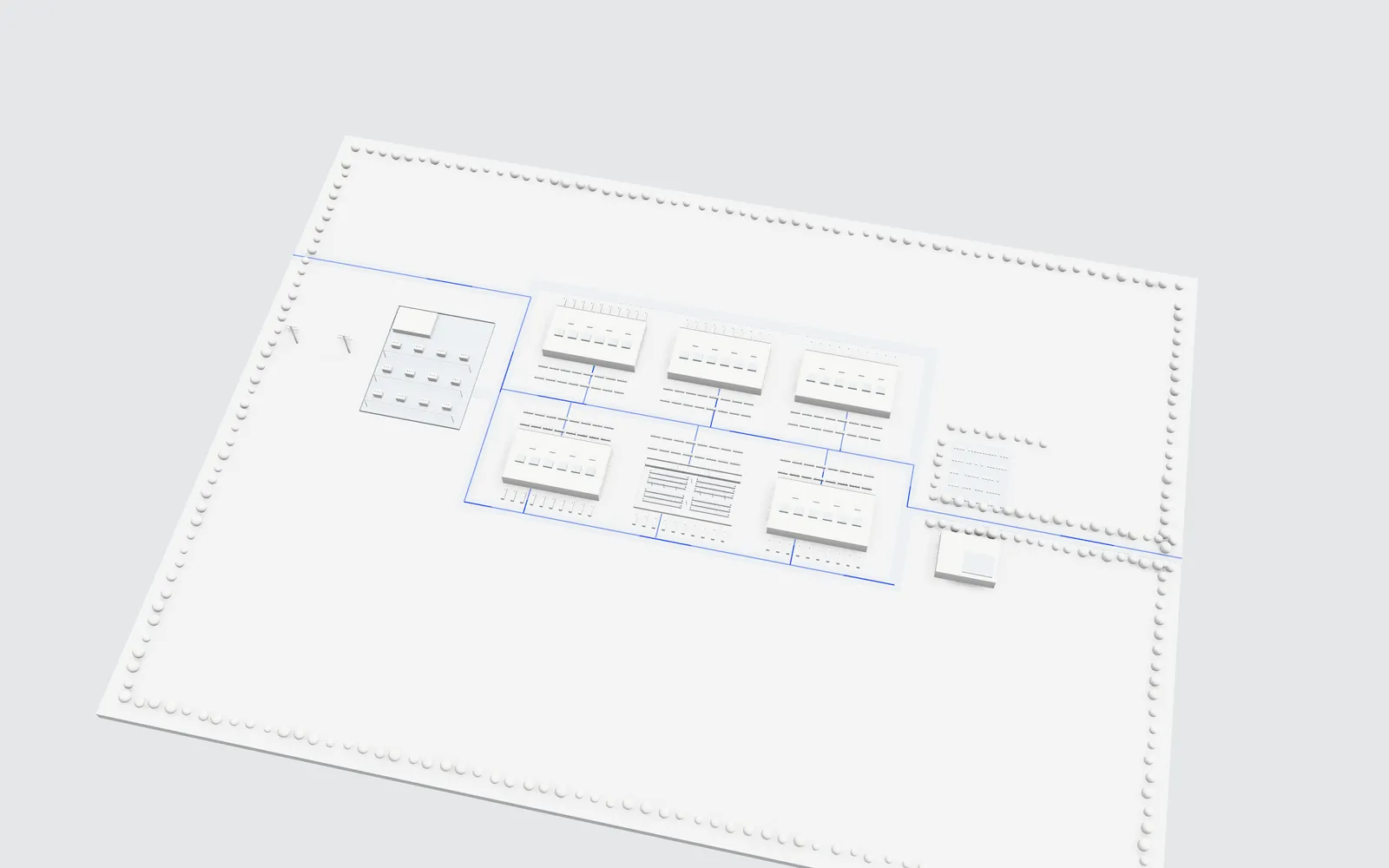
Mantissa builds, owns and runs the GPU clusters behind its inference cloud. Every layer, from the substation to the silicon, is ours to tune, so your models answer faster and cost less to serve.
420MWof contracted power across six regions, 174 MW of it on this campus.
Scroll to travel twelve orders of magnitude
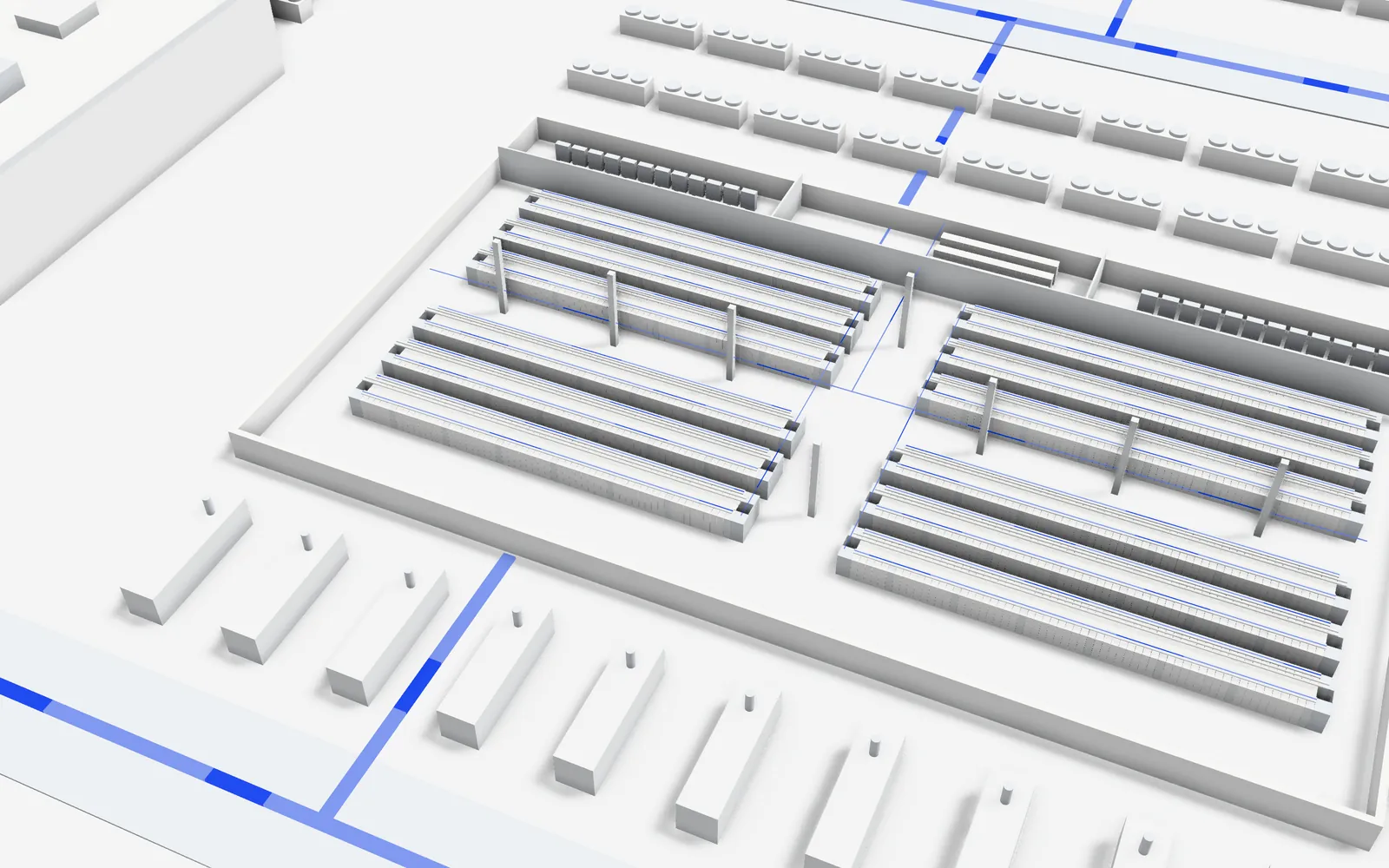
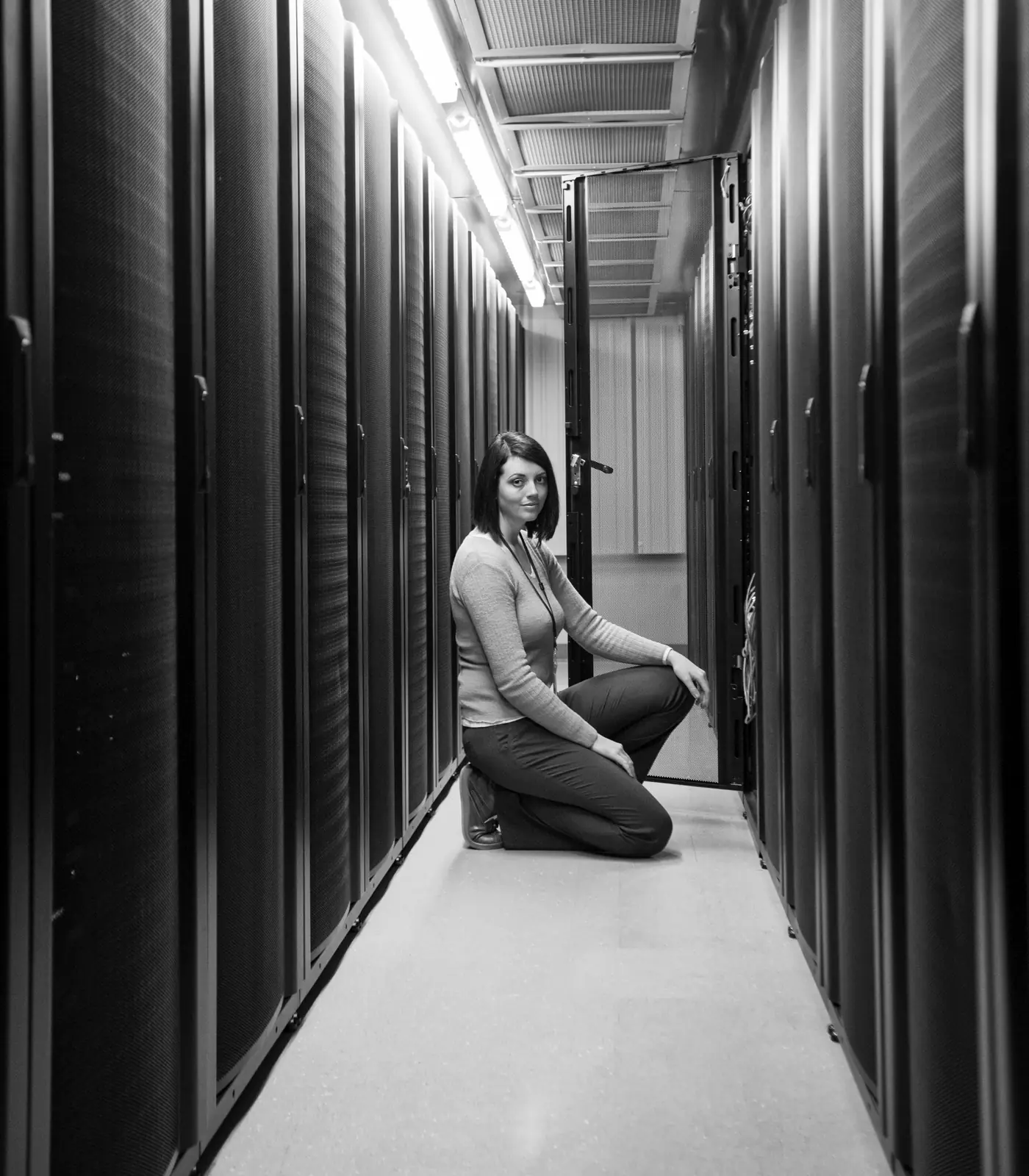
102 mHall 3
Each hall is its own failure domain.
Separate utility feeds, separate cooling loops and a separate network spine. When something fails it fails small, and traffic moves to a healthy hall in under a second.
99.995%measured availability over the trailing twelve months.
6regions21halls1,440racks in this hall
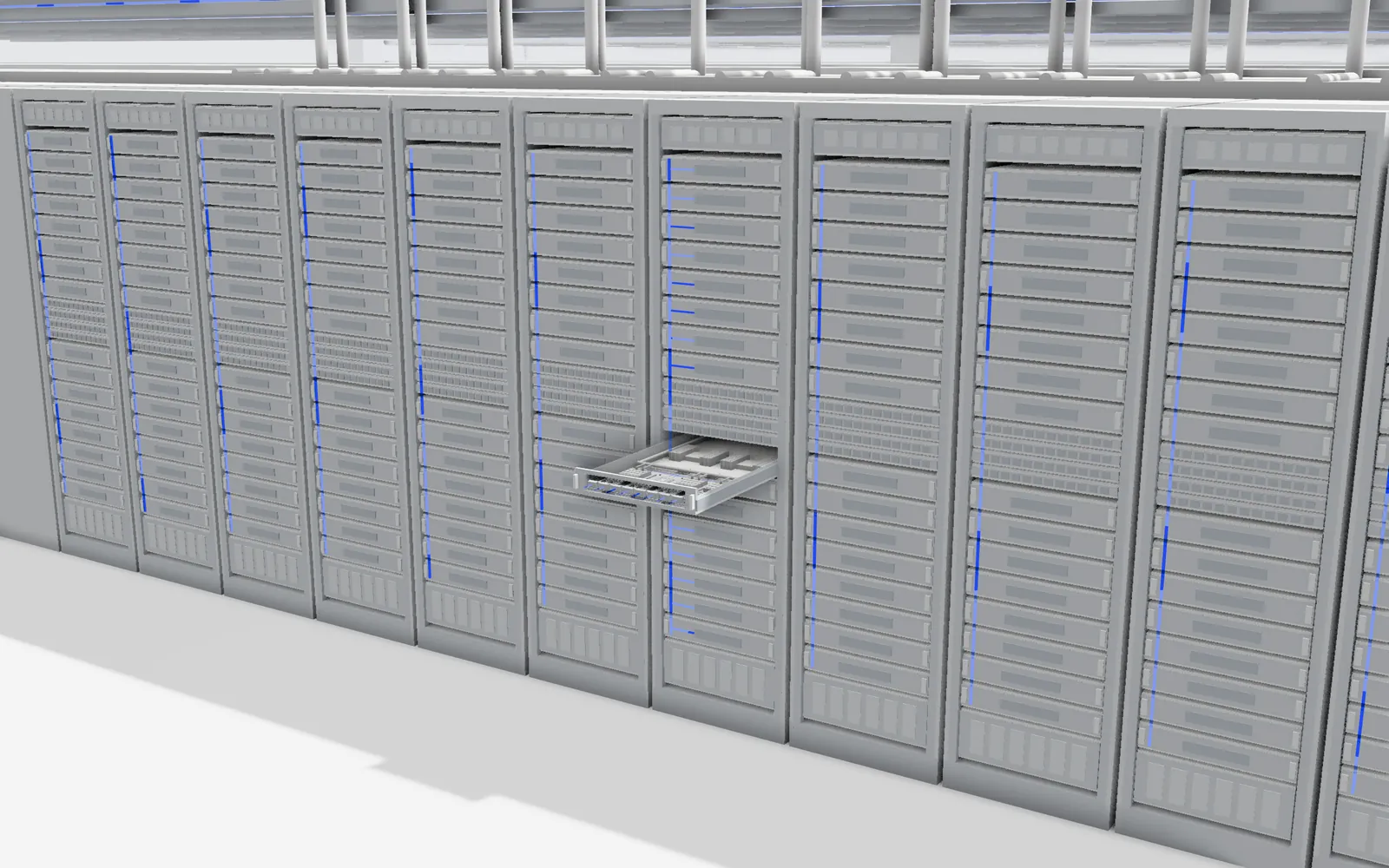
100 mRack C-0412
Water does the cooling, not air.
Each rack draws up to 132 kW and sheds it through a closed liquid loop that runs to a cold plate on every accelerator. In Kajaani the outside air finishes the job for most of the year.
1.12annualised power usage effectiveness (PUE) across the fleet.
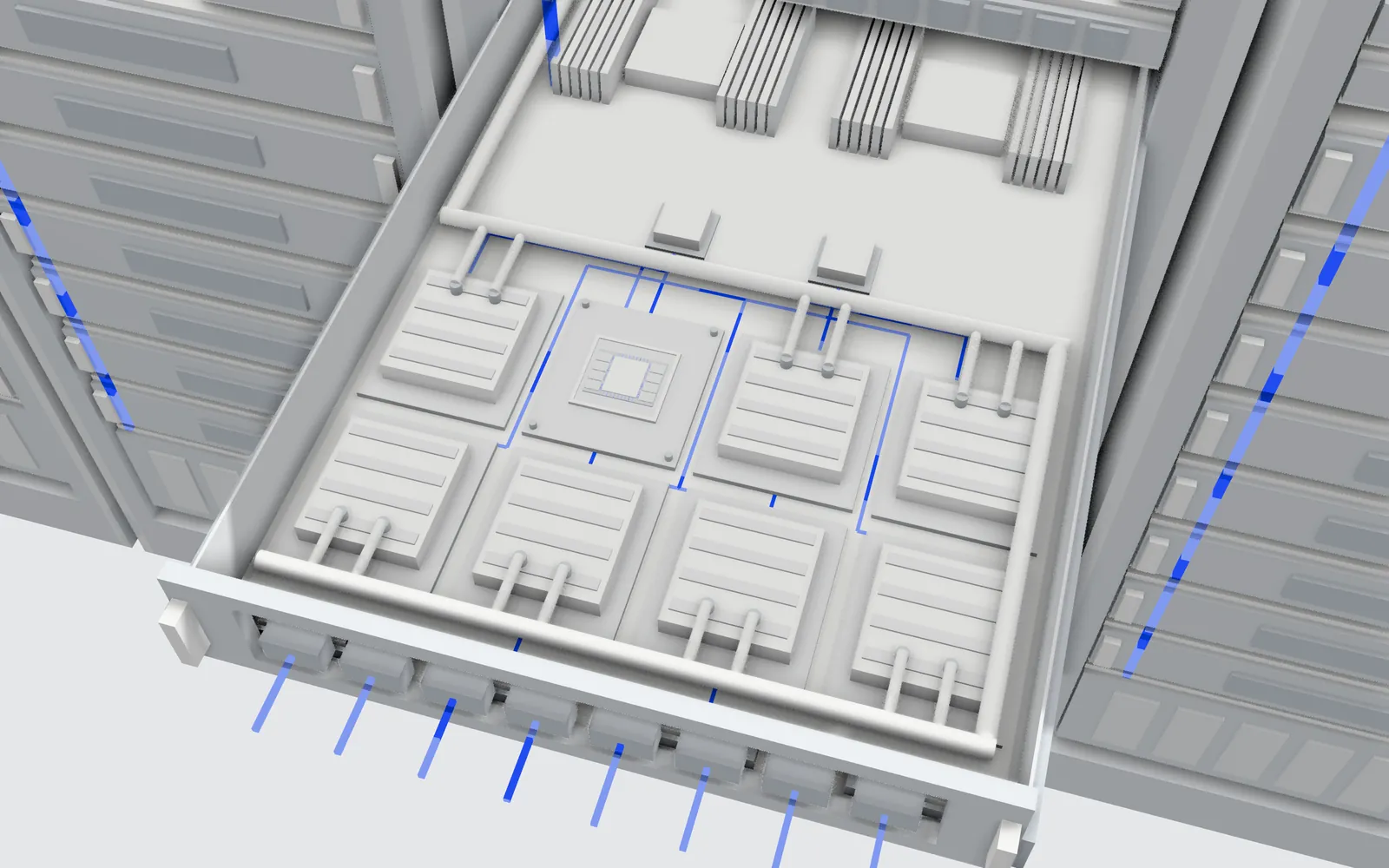
10−1 mCompute node
Eight accelerators, one fabric.
Every node links its eight accelerators through a switched fabric at 1.8 TB/s each, so a 70B model shards across them without waiting on the network.
31,400output tokens per second per node, 70B model at FP8.
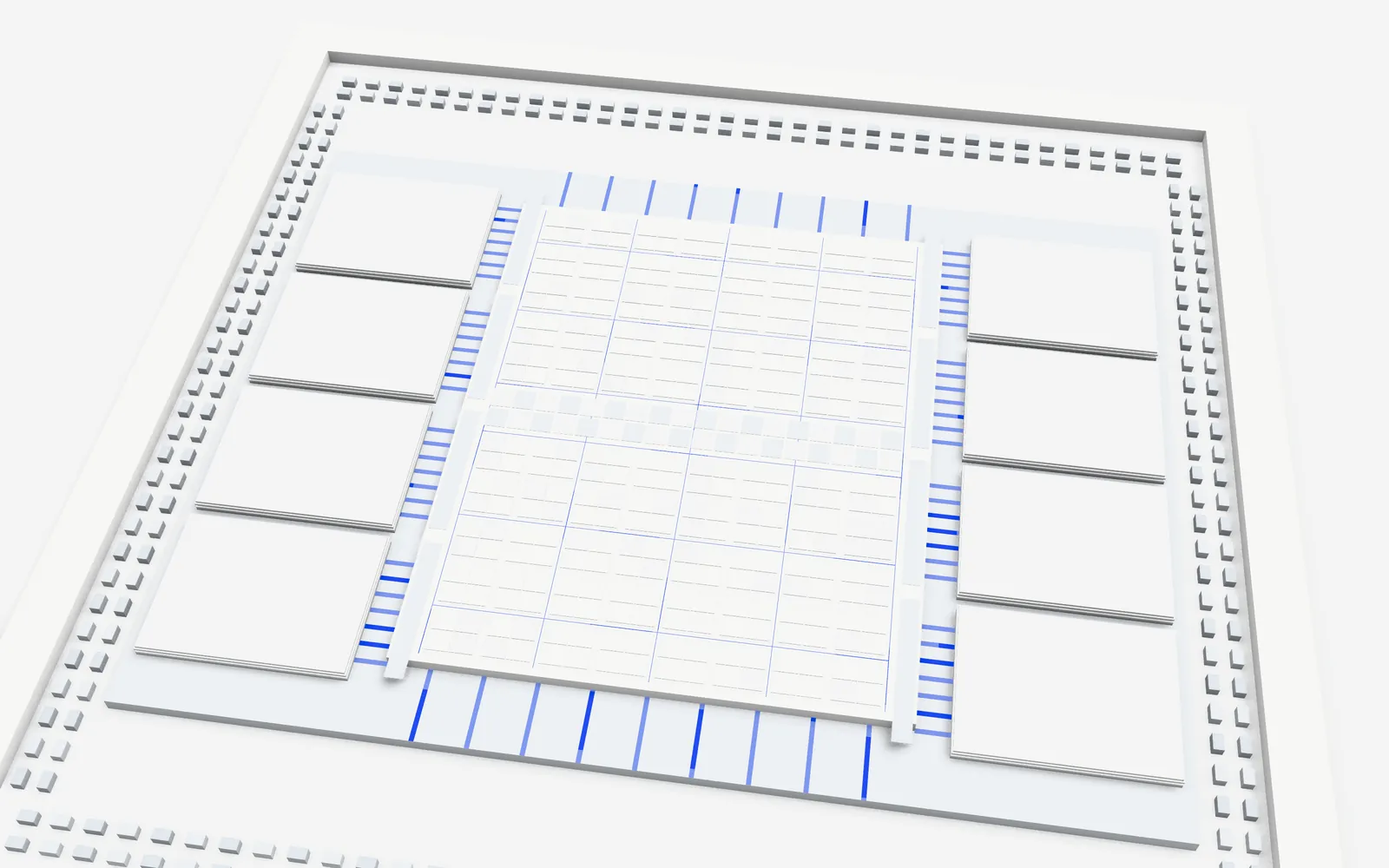
10−2 mAccelerator package
Memory sits a millimetre from compute.
Eight stacks of high bandwidth memory share an interposer with the die. Decoding speed depends on how fast weights reach the cores, and here they arrive at 8 TB/s.
8TB/smemory bandwidth per accelerator, with 192 GB on the package.
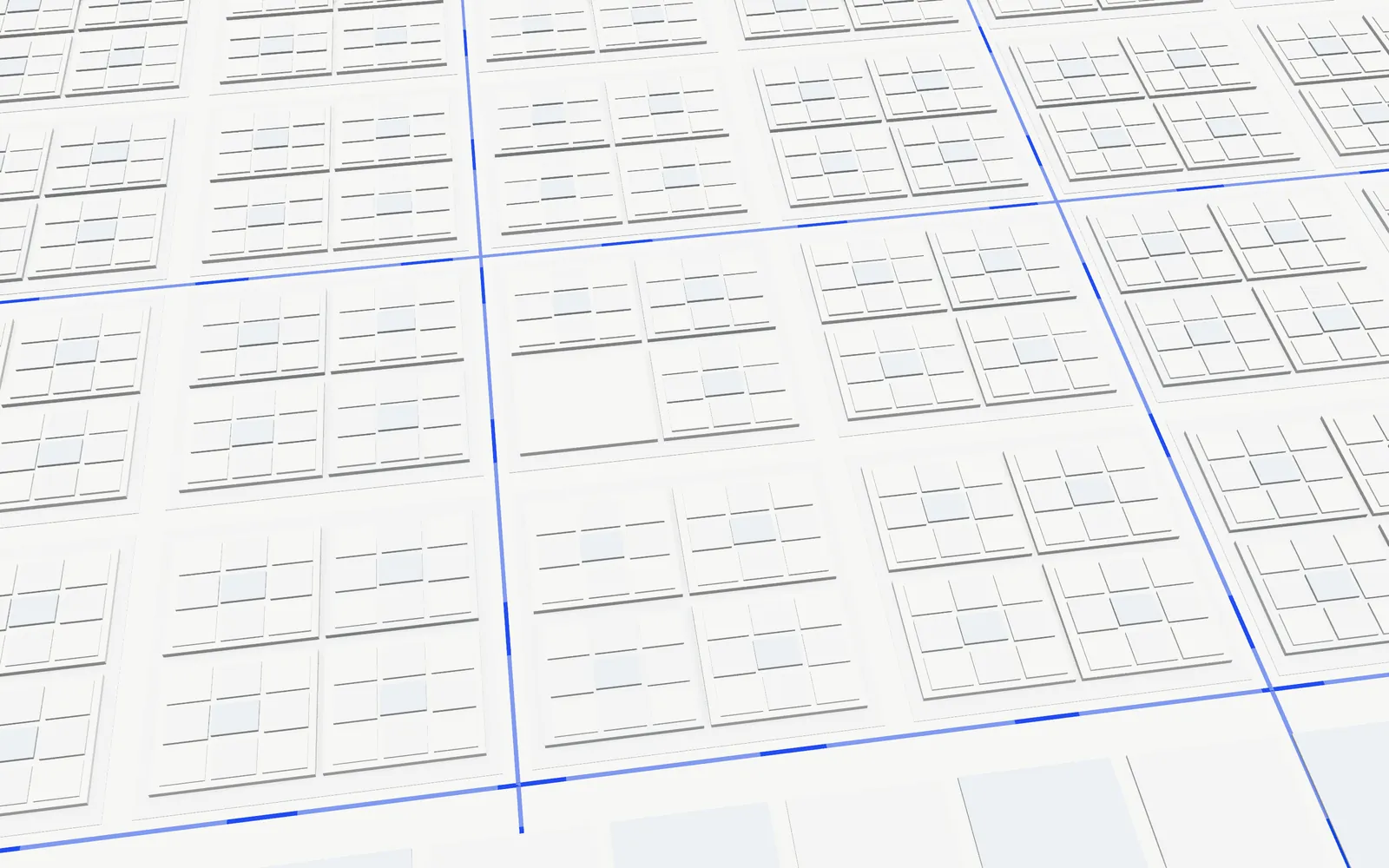
10−3 mSilicon, down to 10−6 m
Latency is decided down here.
Our scheduler keeps hot weights and attention caches beside the cores that need them, and sends each request to the hall nearest your users.
A single token is trillions of transistor switches. Because we run every layer above them, we can quote capacity by the megawatt and price inference by the token.