Hatch

From pencil to the room you will live in.

Sketch a room badly. Hatch renders it properly.

Try a room

How Hatch reads a sketch

  1. 01 / 04

    It reads the lines.

    Walls, openings and the 2.9 m you wrote in the margin.

  2. 02 / 04

    It finds the light.

    The window faces west, so the evening sun reaches the bed.

  3. 03 / 04

    It chooses materials.

    Lime plaster, walnut, a rust linen throw. Each one gets a code.

  4. 04 / 04

    It renders the room.

    A finished room to show the people who will live in it.

    Try a room
T-04 Rust linen L-01 Lime plaster F-01 Walnut boards 07:00 SUN PATH, 21 MARCH

Any pencil will do.

A napkin, tracing paper, a plan from 1998 photographed on a phone. Hatch reads the walls, the openings and the numbers in the margin.

  • Back wall4.00 m
  • Window, facing west1.20 m
  • Ceiling, from a margin note2.90 m

Try a room.

Pick a plan and a mood, or describe the room in your own words. Hatch reads it and draws two options in seconds.

Plan
Mood

Example: living room, warm minimal.

An architect sitting on a plaster block with a pencil and a roll of tracing paper, in graphite tones.

Your architect still signs.

Hatch draws options and prices them roughly. It cannot see structure, services or what is behind your plaster, so a licensed architect or engineer signs every drawing that gets built.

“I bring three rendered rooms to the first visit instead of a mood board.”

Rana Kassab, interior designer, Sharjah.

Three rooms a month are free.

PlanWhat you getPrice
SketchbookThree rooms a month, two moods each, cost bands.Free
StudioEvery room, client sheets at A1 and A3, materials export.AED 190 a month

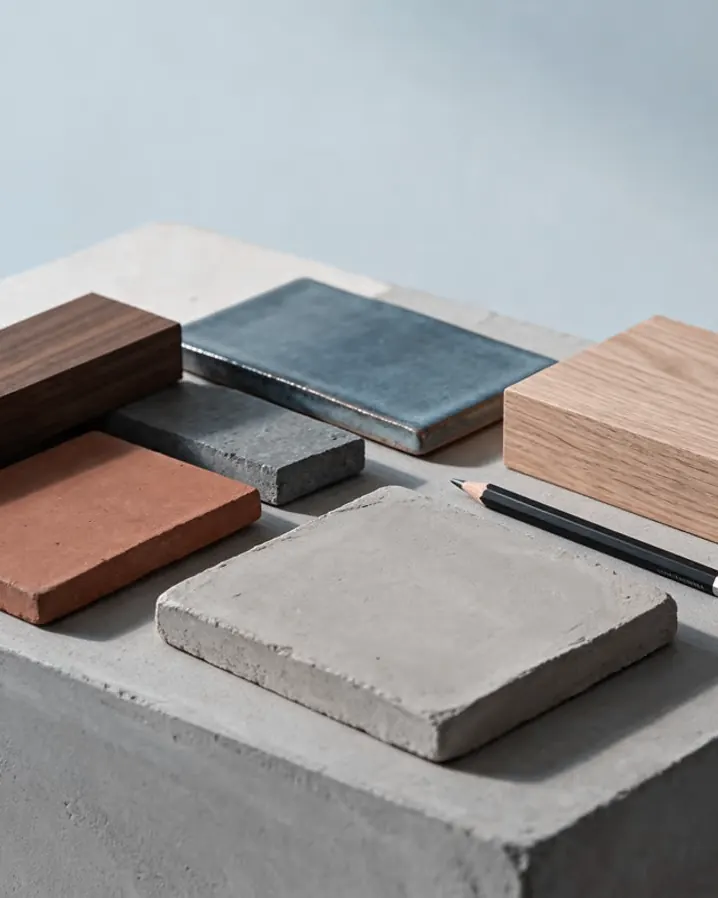
Material swatches on a plaster plinth: walnut, a rust clay tile, a slate blue tile, lime plaster, pale oak and a pencil.
Material board, SK-03. Rendered by Hatch.