01 / 04
Asamoya Tea
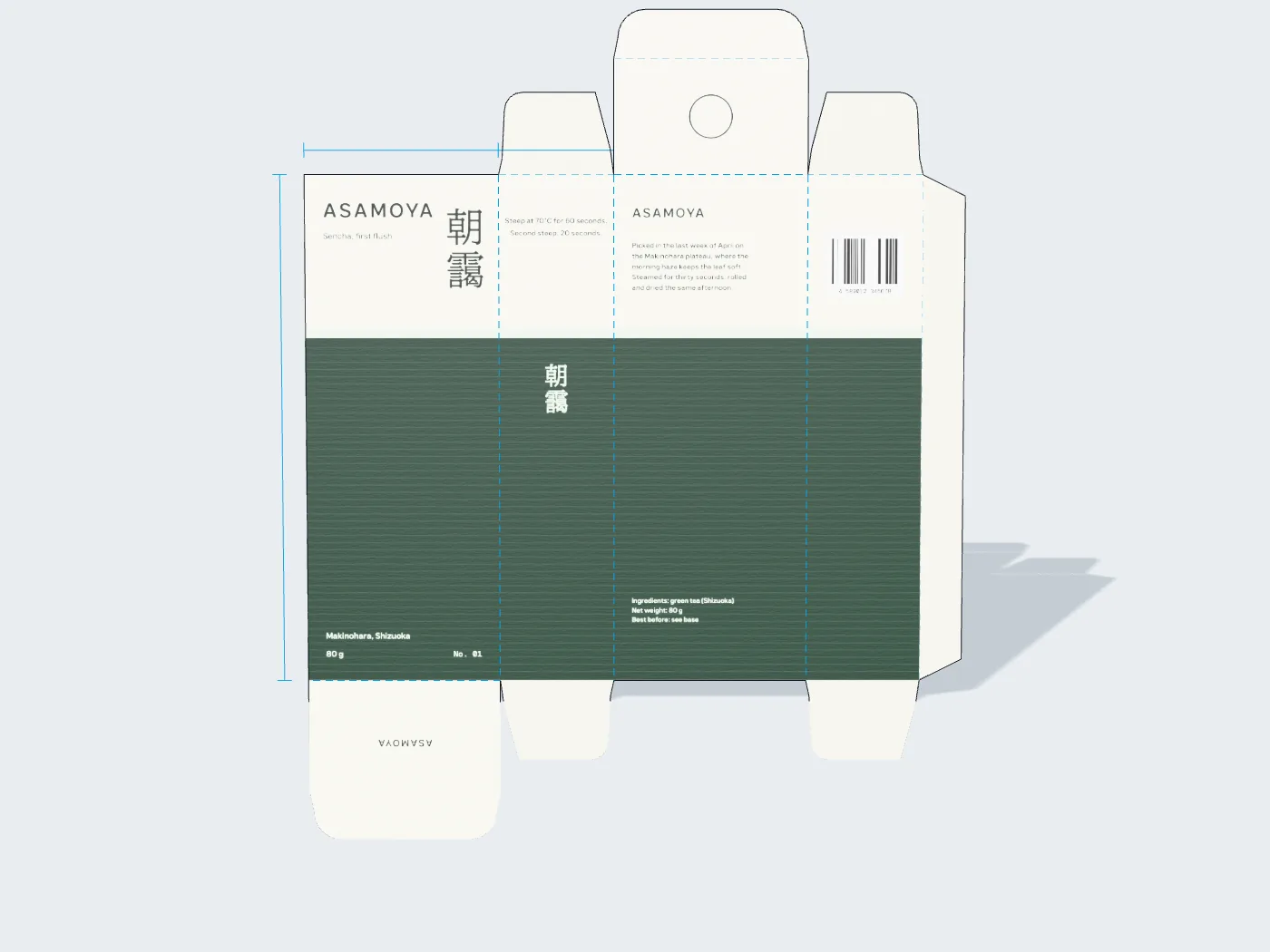
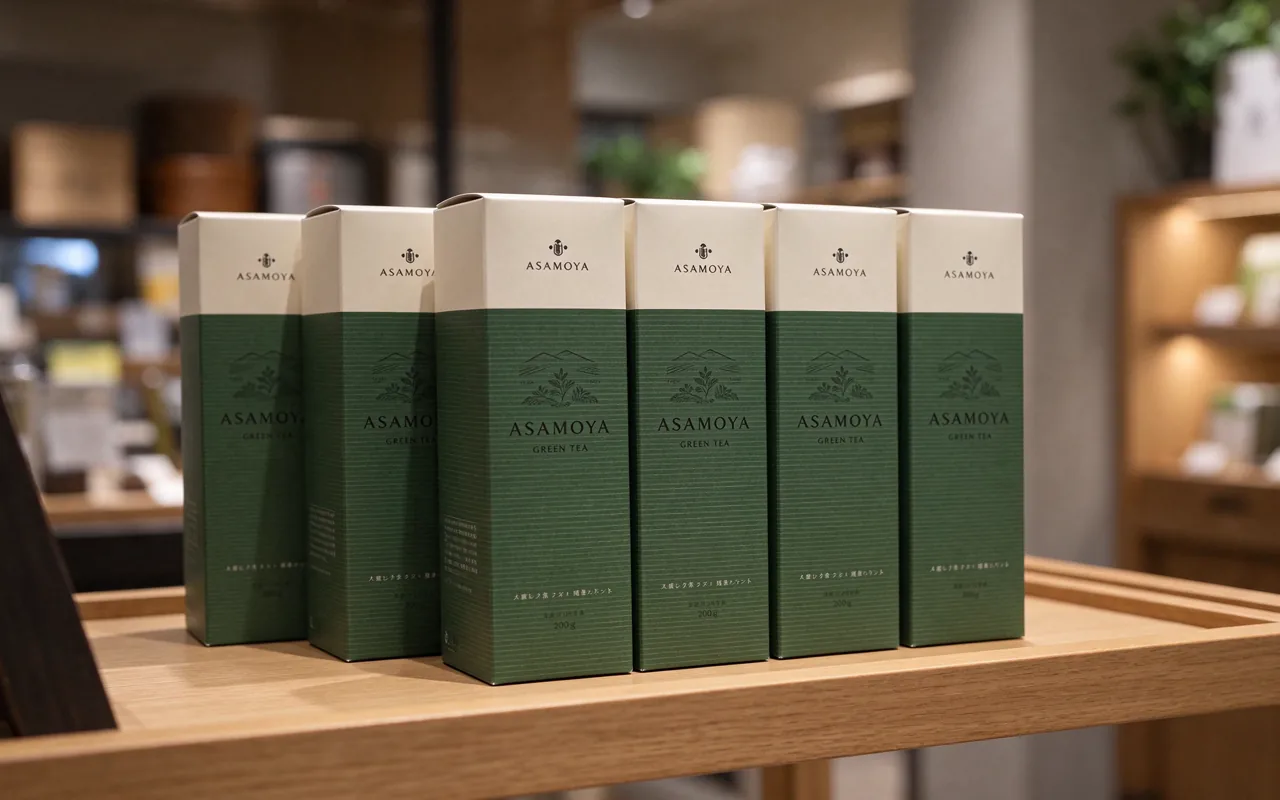
A first flush sencha that sold on taste, in a carton that finally looks like it.
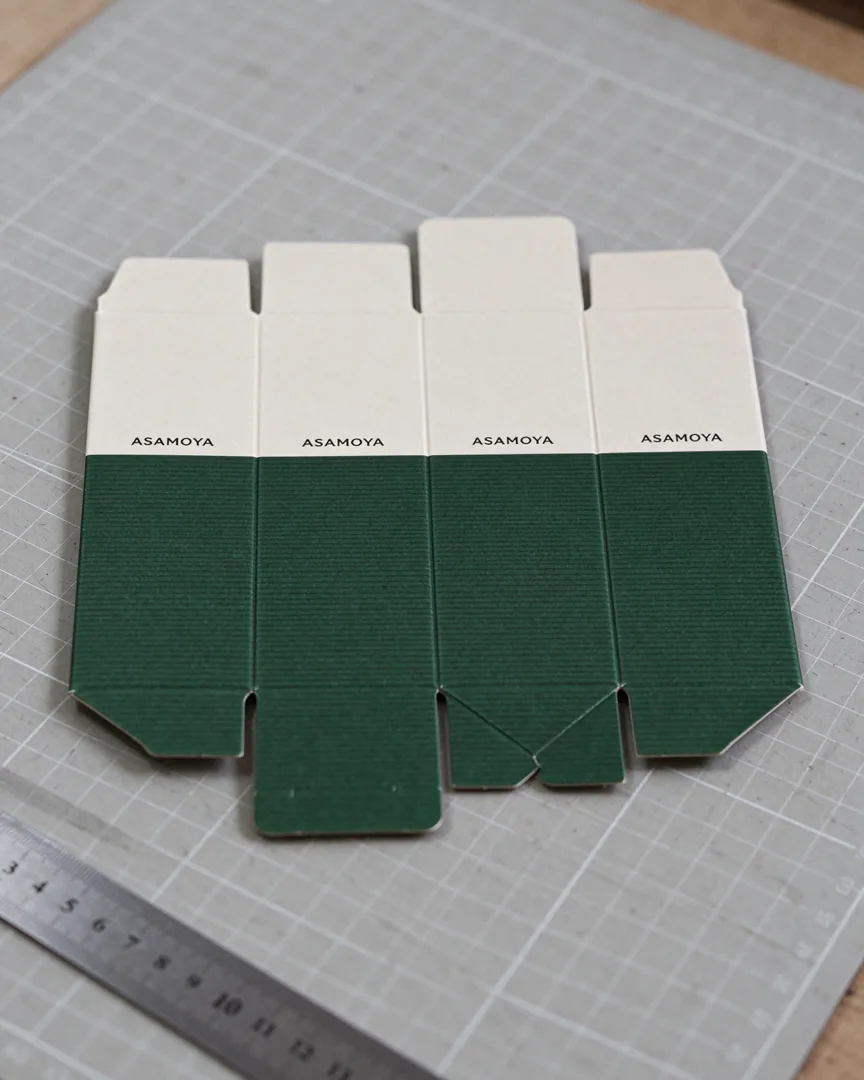
- Structure
- Reverse tuck end
- Size
- 64 × 38 × 168 mm
- Board
- 350 g/m² FBB, two spot inks
Listed in 38 department stores in its first season.
Open the case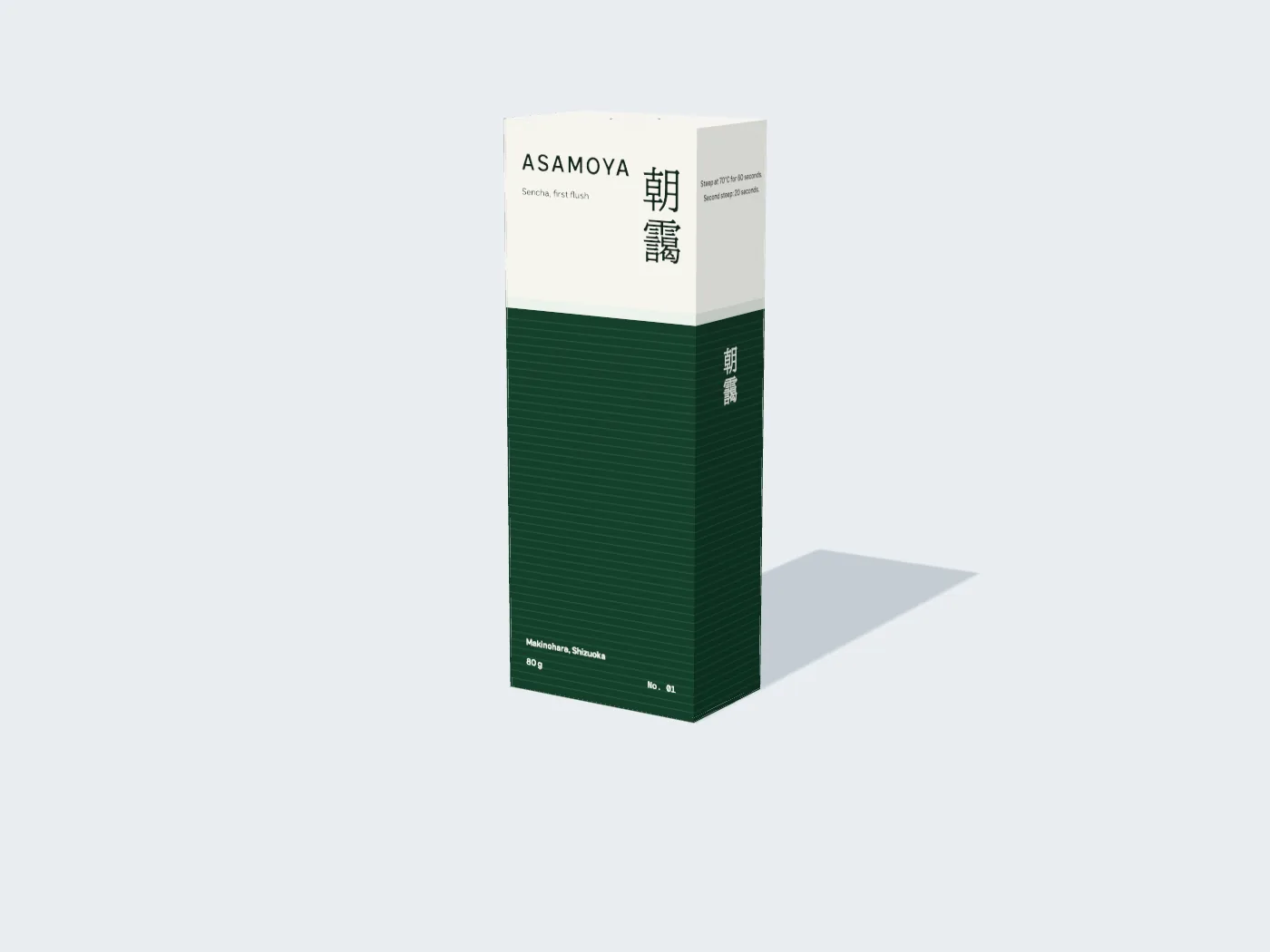
studio@foldline.jp
Kuramae, Tokyo
Foldline is a packaging and structural design studio in Kuramae, Tokyo. We draw the die and the print as one drawing, cut the white proof the same day, and stay on press until the run is folded.
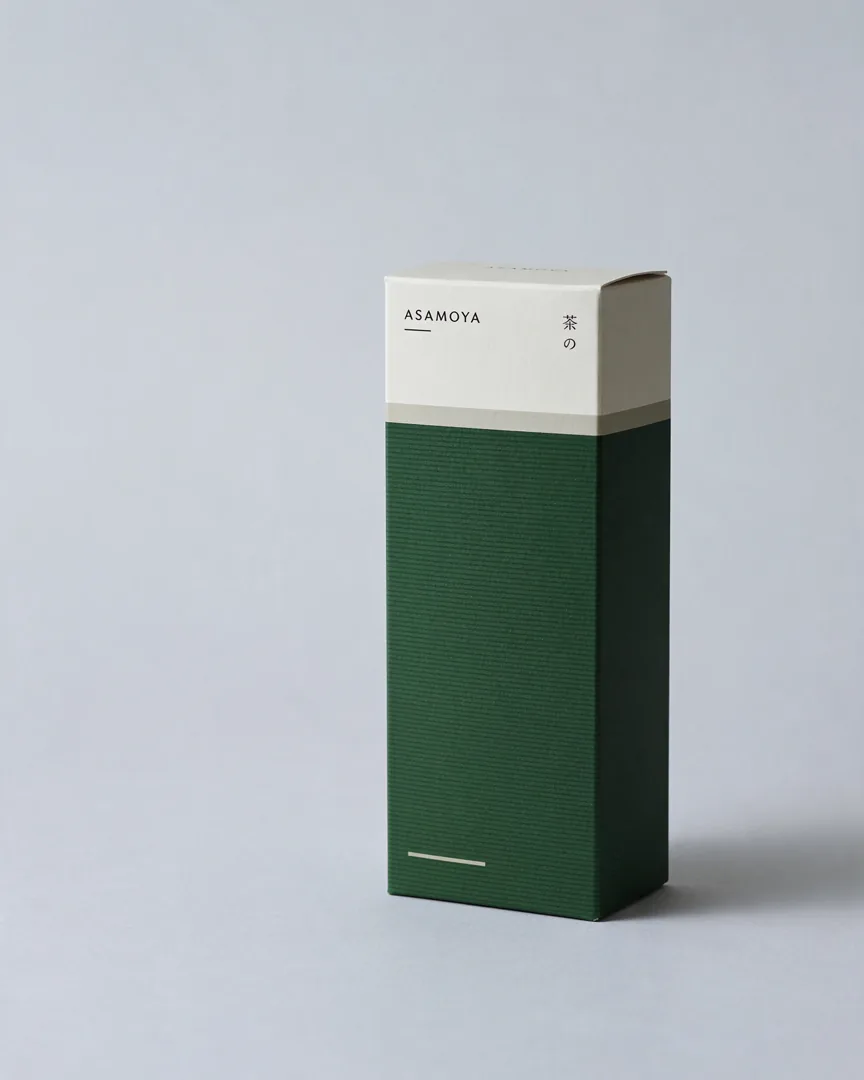
Asamoya Sencha, 80 g carton. Drag to turn it.
01 / 04
A first flush sencha that sold on taste, in a carton that finally looks like it.
Listed in 38 department stores in its first season.
Open the case
02 / 04
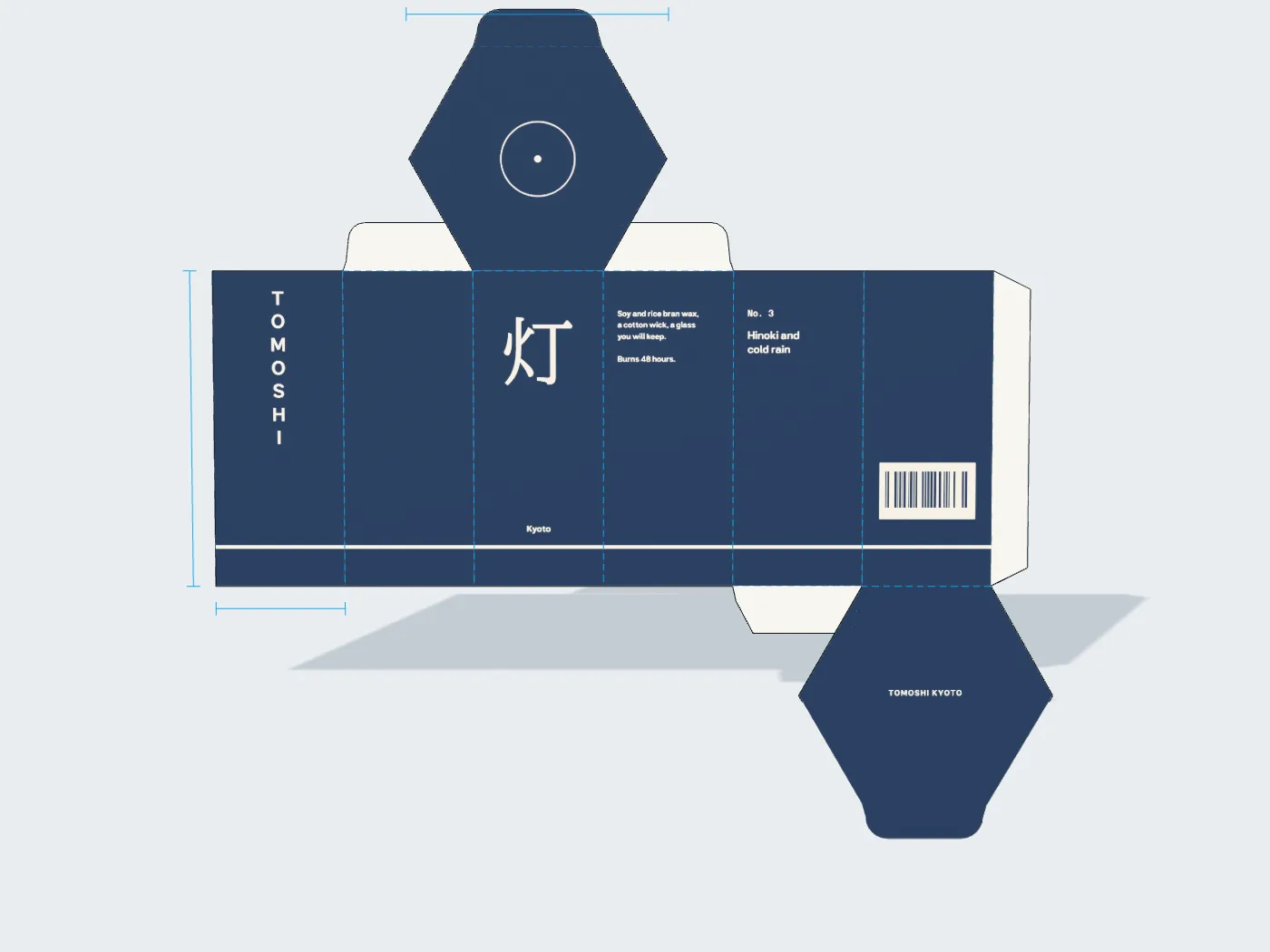
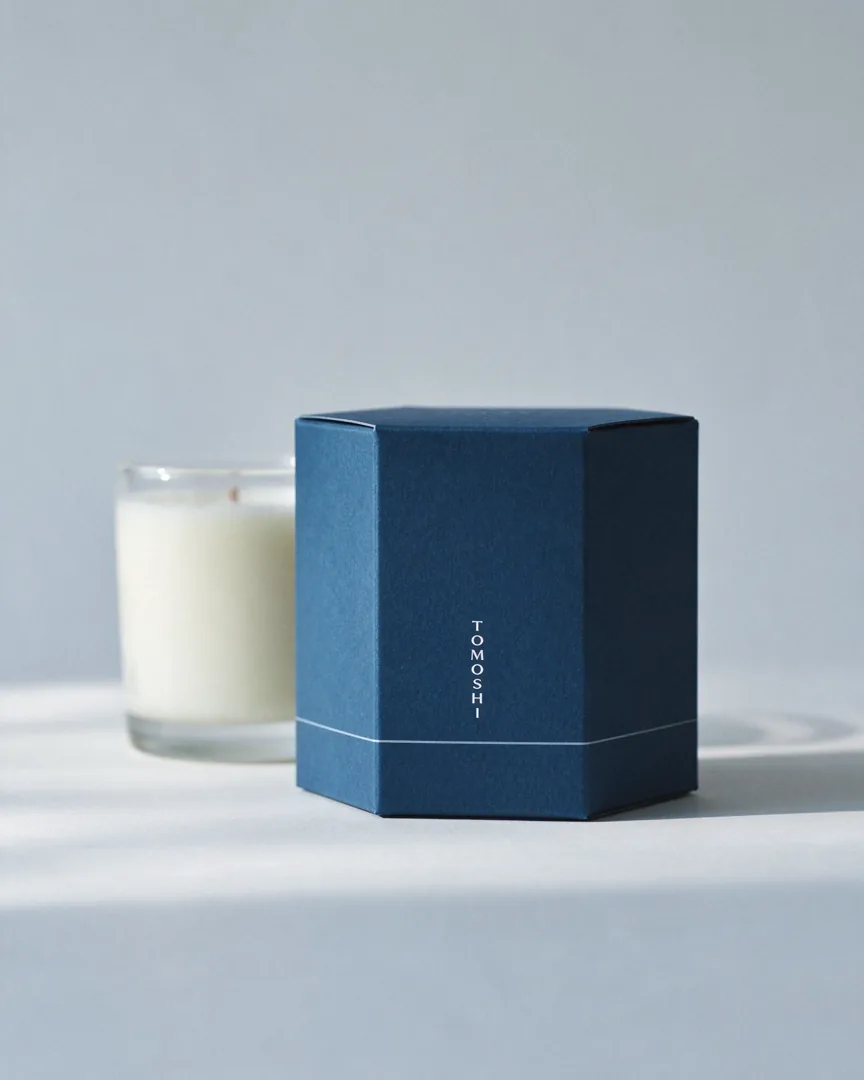
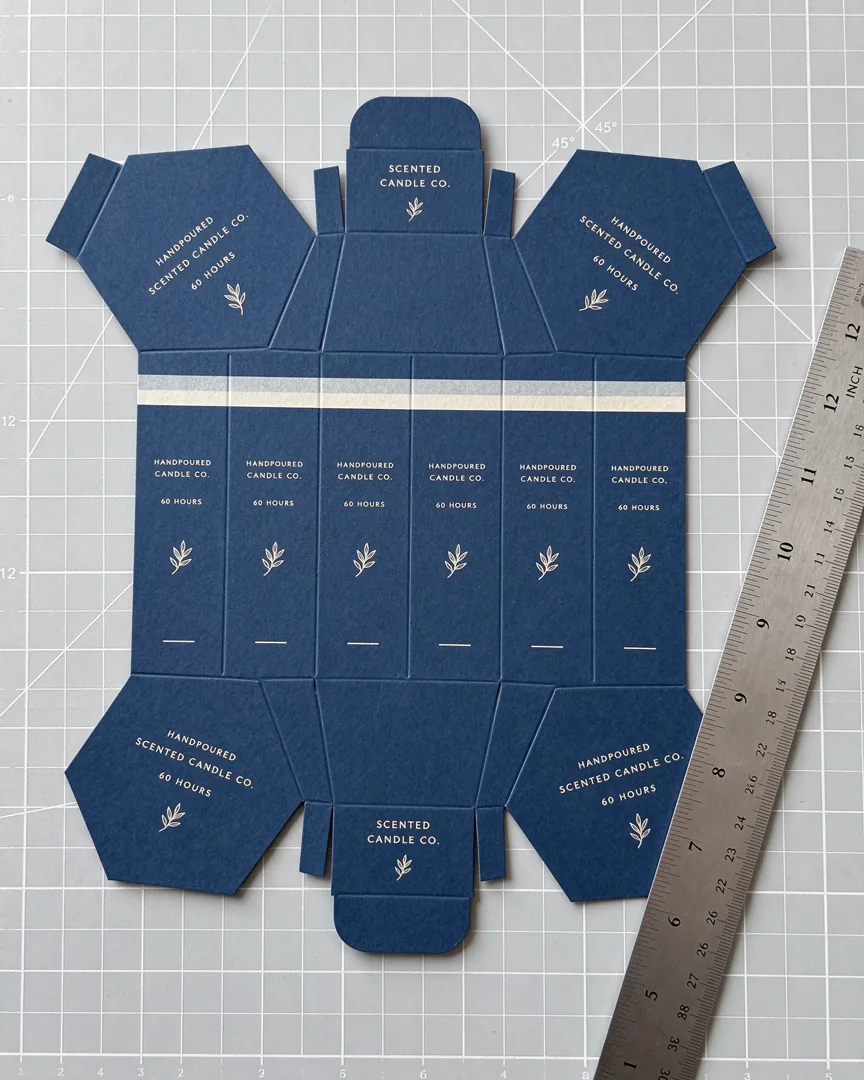
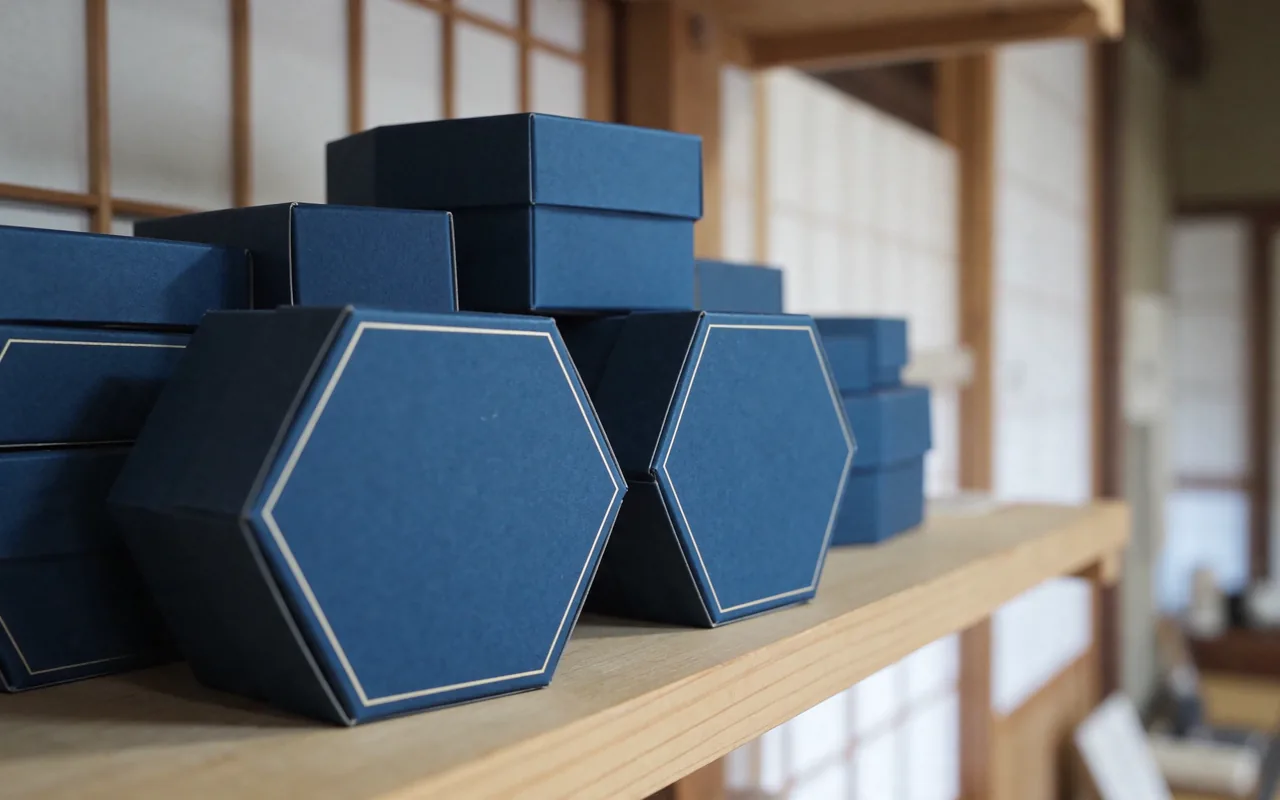
A hexagon that locks without glue and holds a glass jar without an insert.
Breakage in transit fell from 6 percent to under 1.
Open the case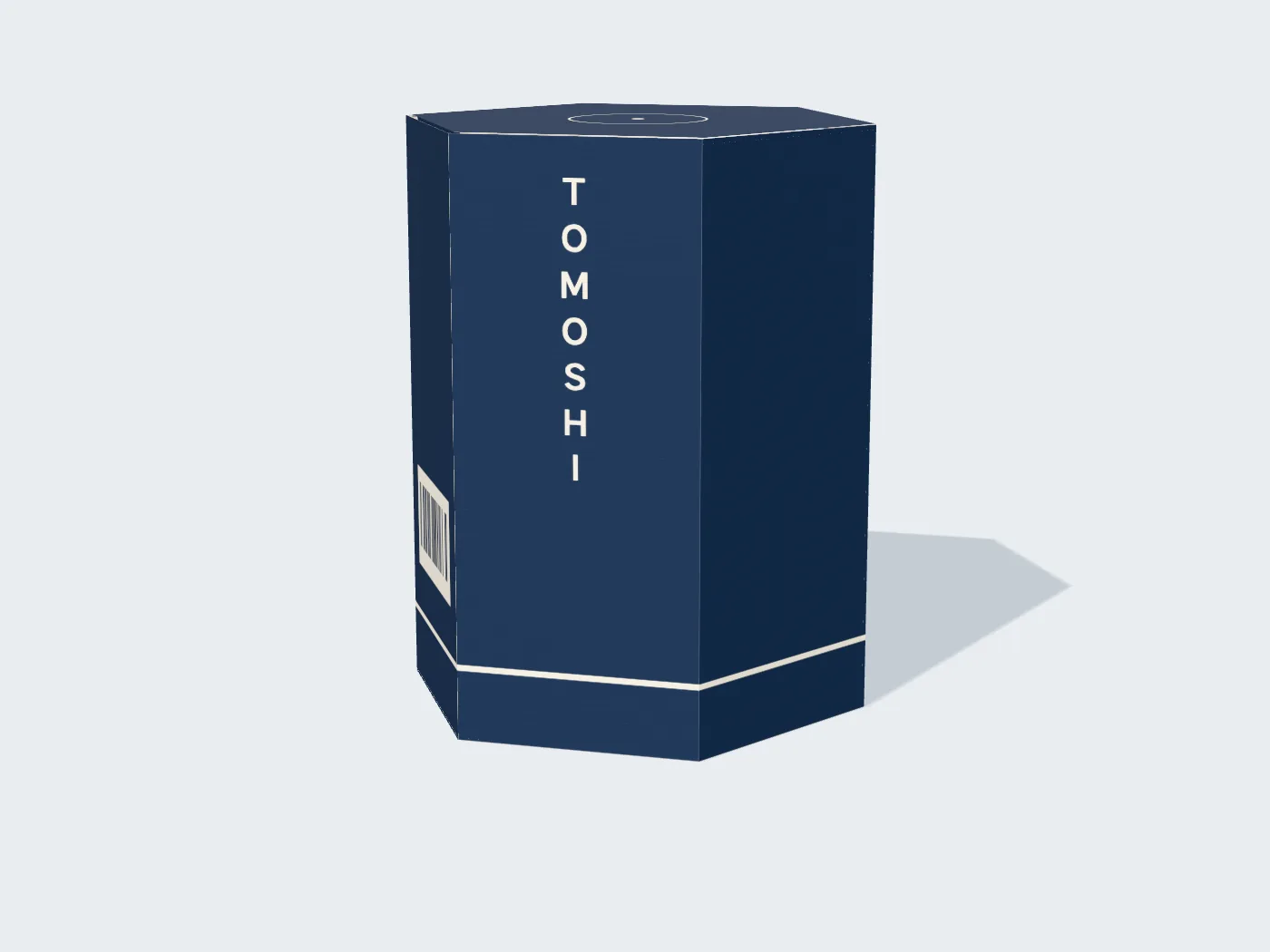
03 / 04
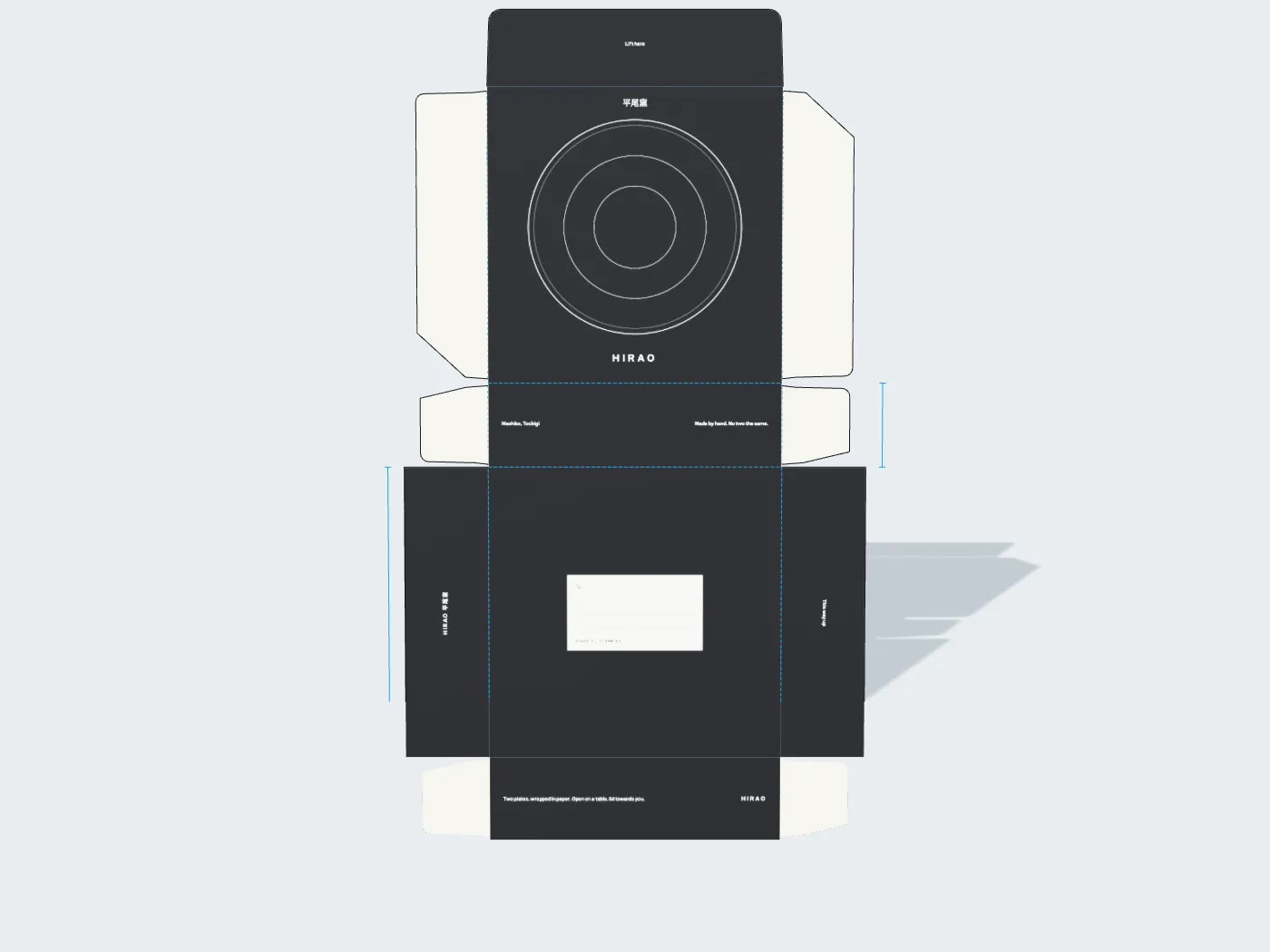
One mailer that ships the plates and becomes the gift box on the table.
31 percent less board per order, and no tape.
Open the case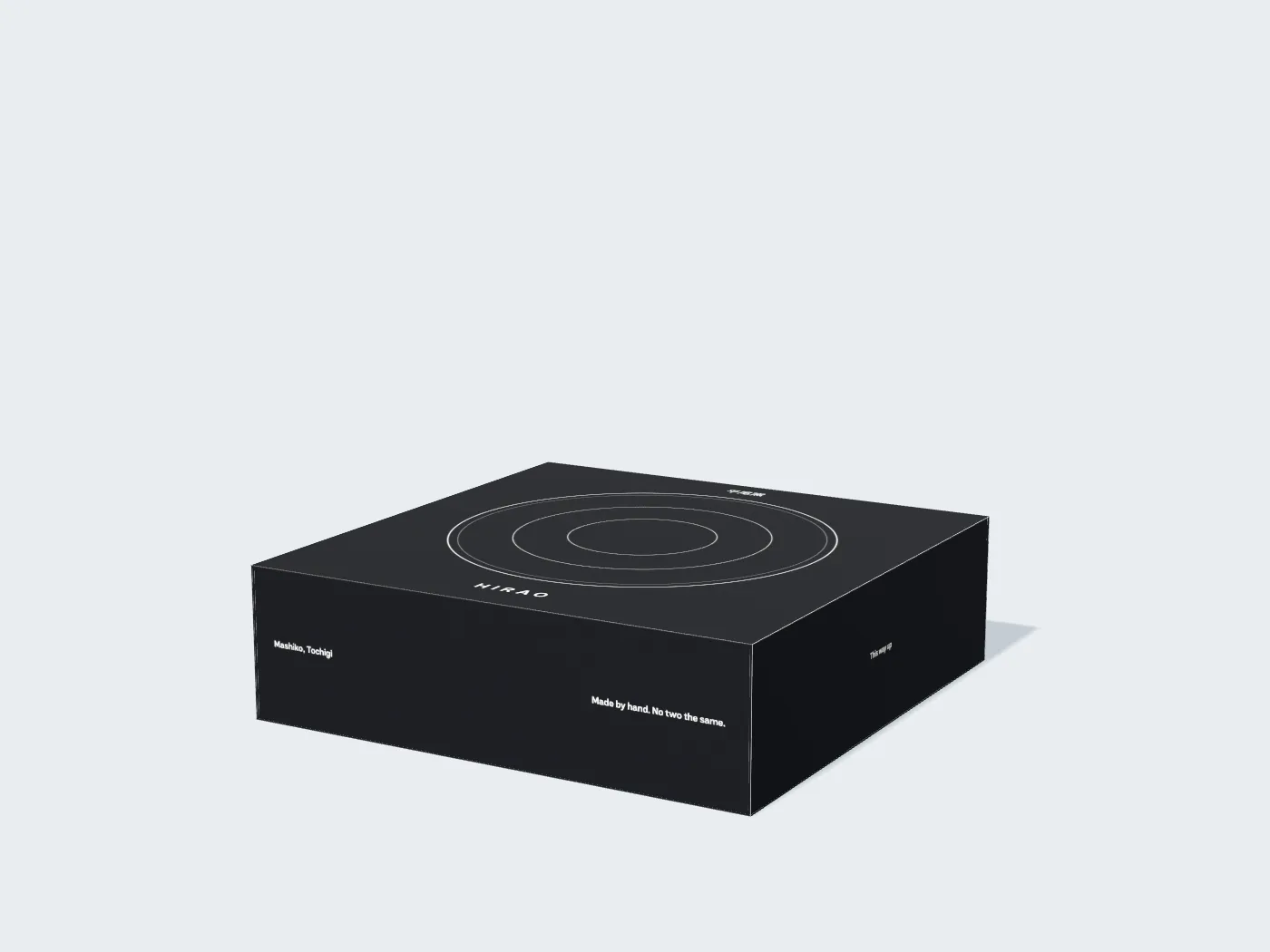
04 / 04
Forty sticks in a triangle that stands on the counter and never rolls off it.
The first run of 12,000 sold out in nine days.
Open the case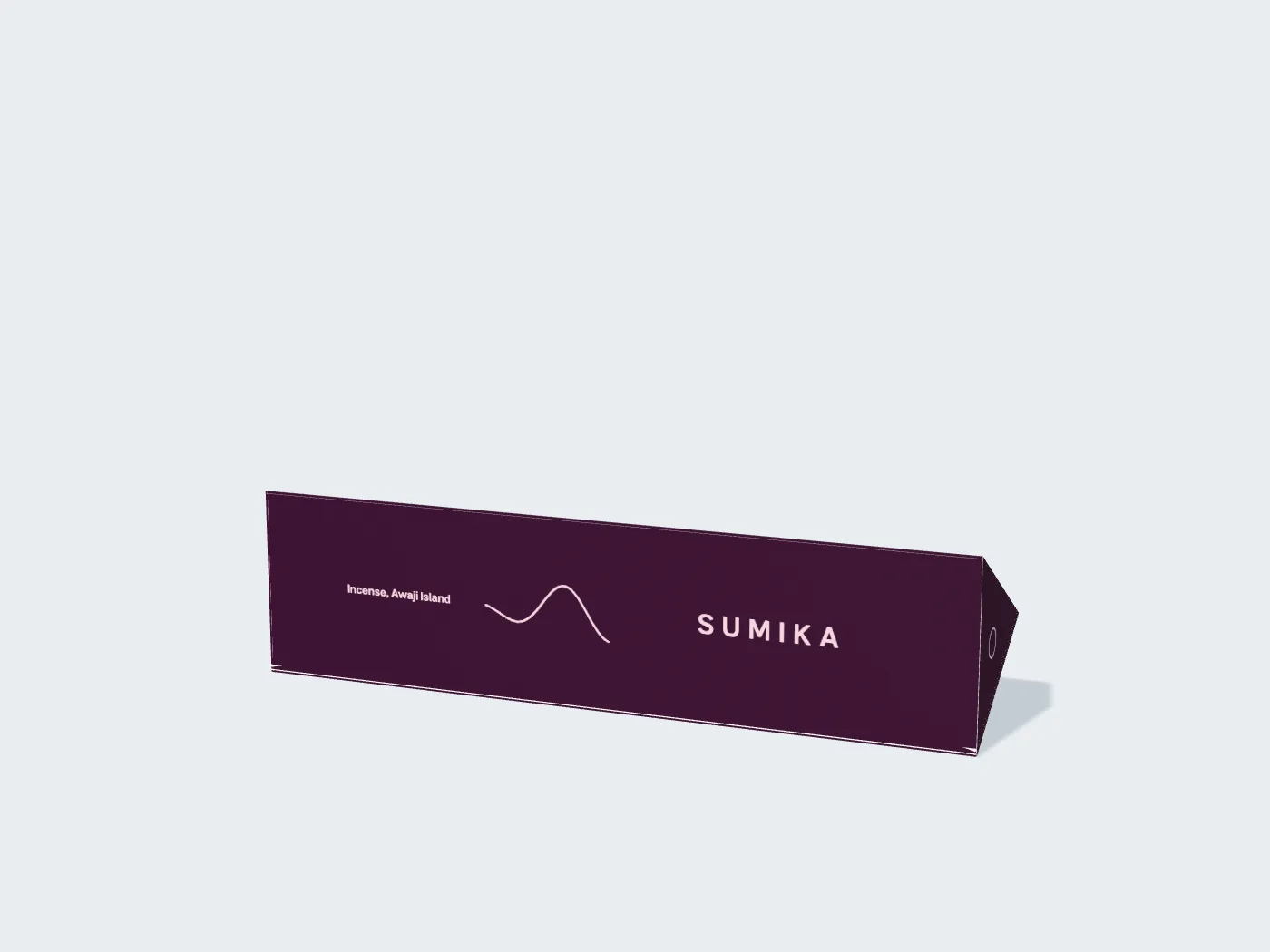
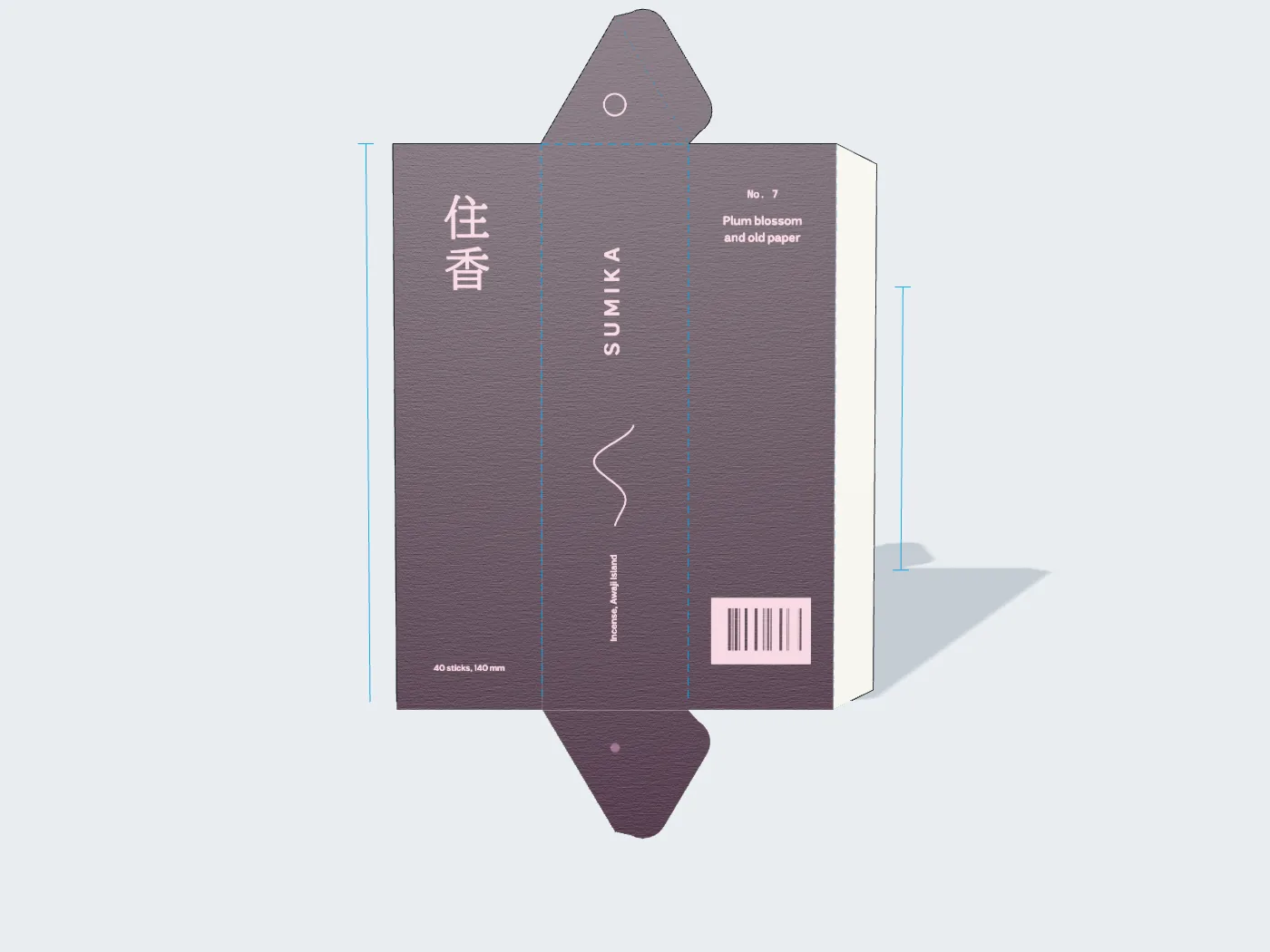
Every pack, photographed standing and photographed flat.
01
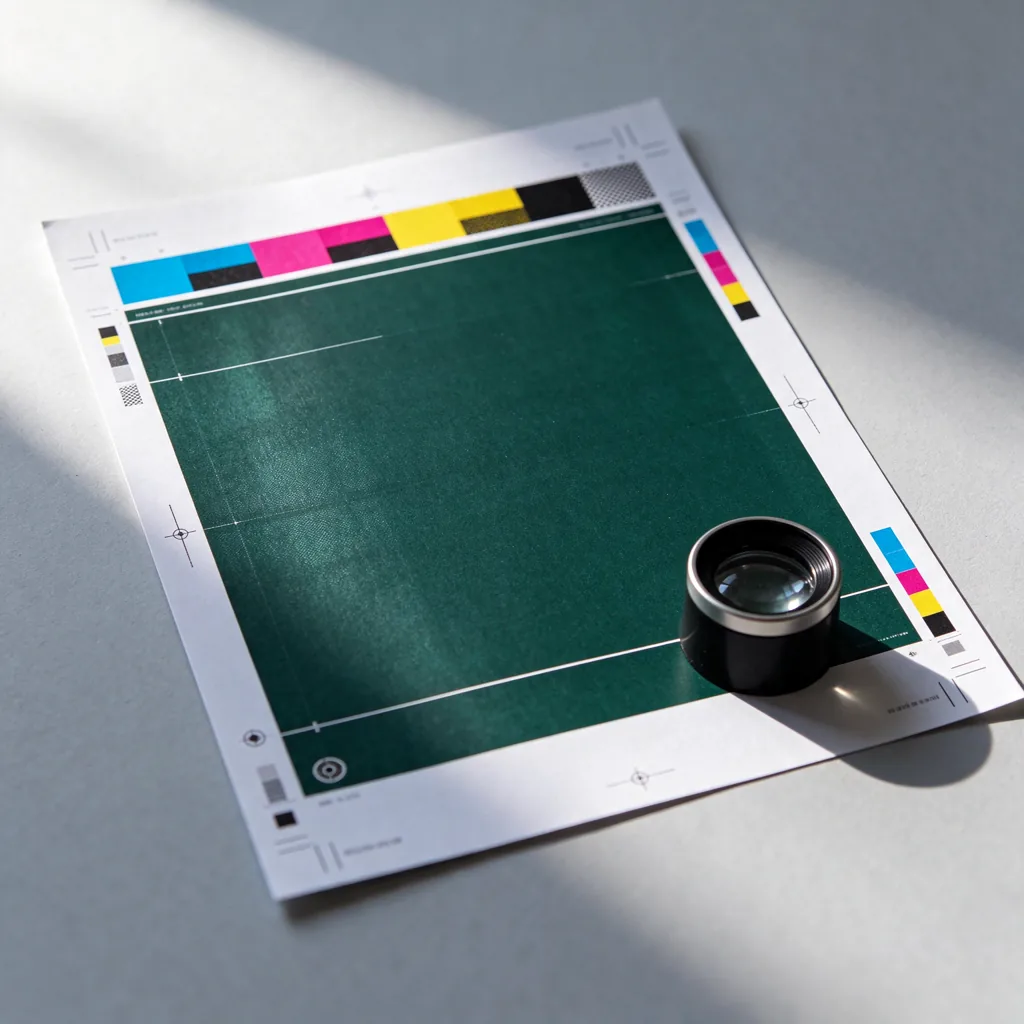
Dielines, inserts and closures, drawn here and cut on our own table the same afternoon. You hold a white proof before you see a render.
02
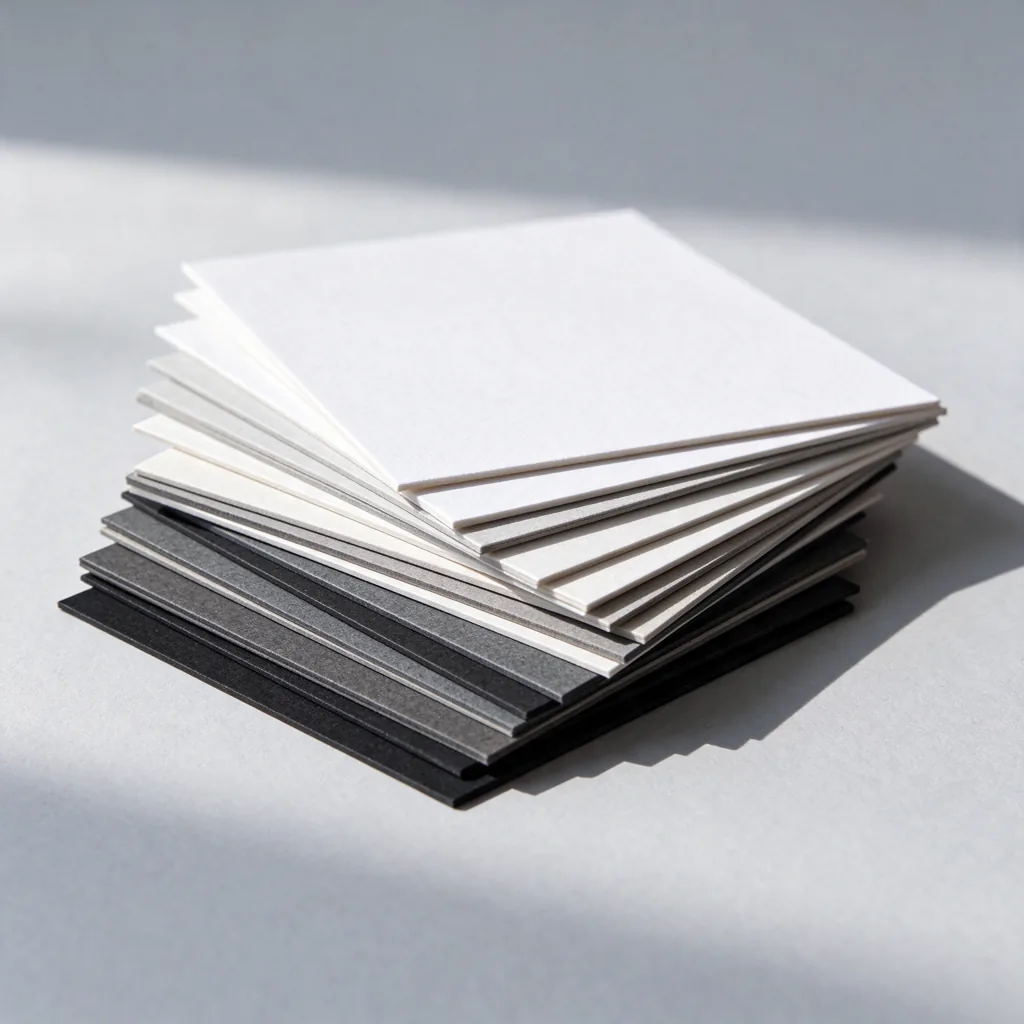
Inks, foils, emboss and varnish, signed off on press in Saitama or Osaka by the person who drew the artwork.
03
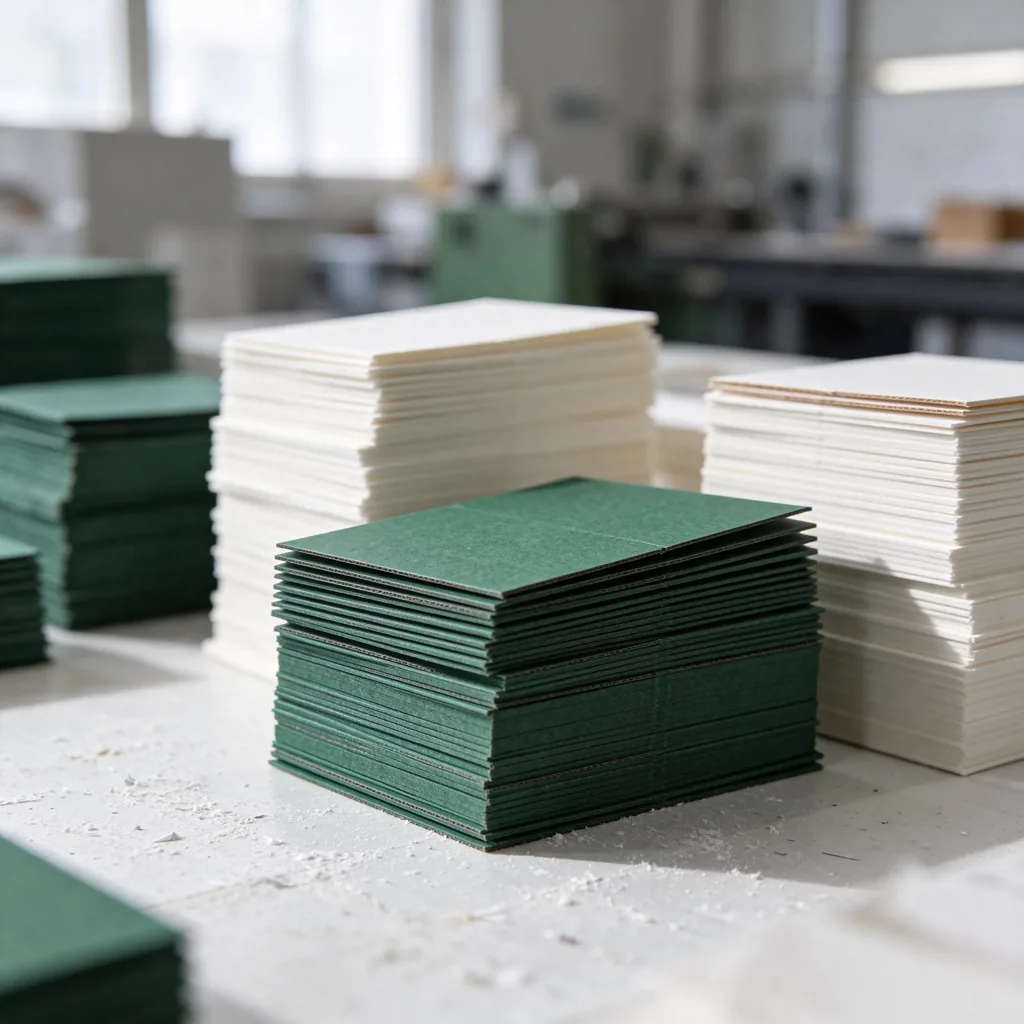
Board chosen for weight, stiffness and what happens to it after the bin. We take grams out before we add a finish.
04
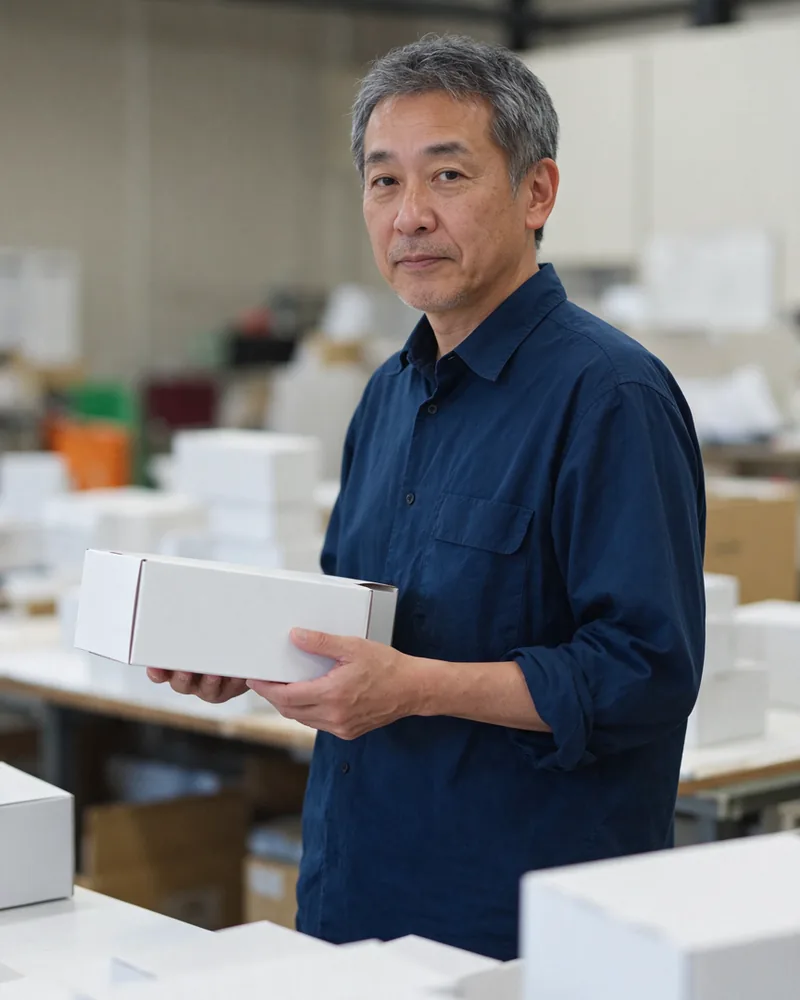
We run the printer, the die maker and the gluer for you, from the first 500 to the next 500,000.
Twelve people in a former toy wholesaler by the Sumida river. One long table, a flatbed cutter, a proofing wall and a shelf of every pack we have made since 2014.

Ren Okabe
Founder, structure
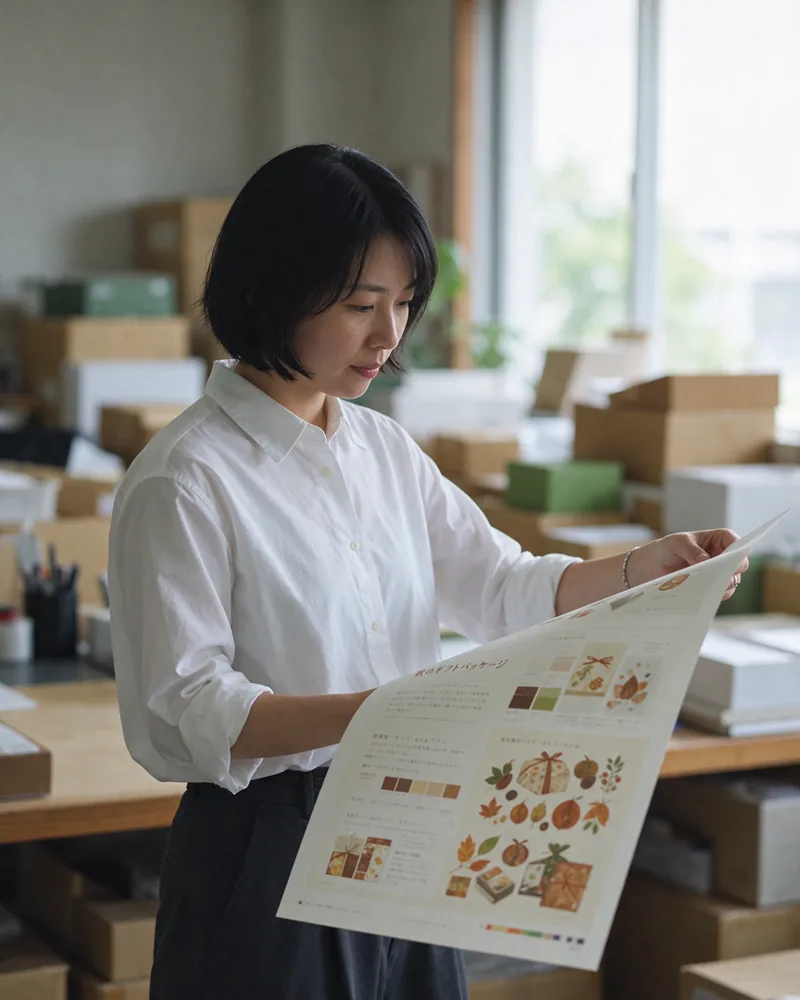
Mio Takeda
Print and finish
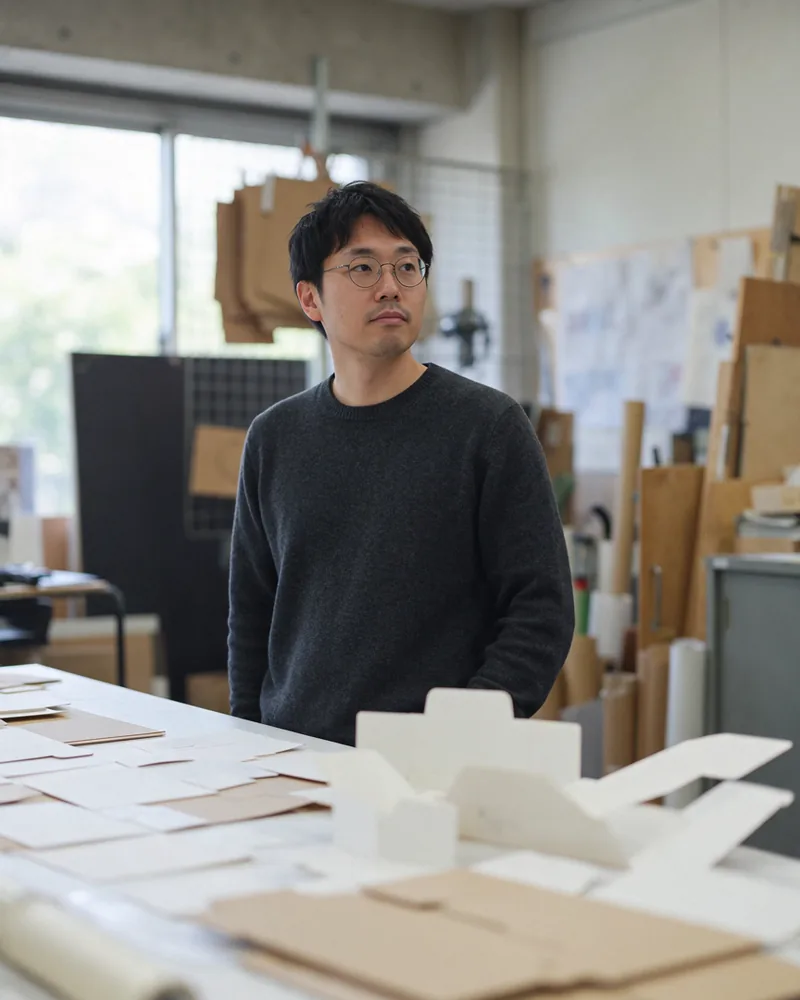
Kaito Mori
Production

Aya Ishii
Studio and producers
And eight more: two structural designers, three graphic designers, a colour technician and two producers.
Tell us what goes in the box. Ren reads every spec and replies within two working days.
FL-2611-047
Listed in 38 department stores in its first season.
Asamoya grows first flush sencha on the Makinohara plateau and sold it in a silver tin that looked like every other tin. Buyers tasted it and listed it; shoppers walked past it.
A tall carton that stands where tins lie down. The green rises two thirds of the way up the walls, drawn as fine rows, and stops at a pale line for the morning haze the farm is named after. The tuck is notched so it opens with one thumb.
Breakage in transit fell from 6 percent to under 1.
Tomoshi pours its candles into glass that customers keep. The old box needed a moulded pulp insert to stop the jar moving, and still lost six in every hundred to the courier.
A hexagon sized to the jar, so the six walls hold it on every side. The lid tucks, the base locks, and there is no glue line to fail. One indigo ink, with a bare line left round the walls at the height of the wick.
31 percent less board per order, and no tape.
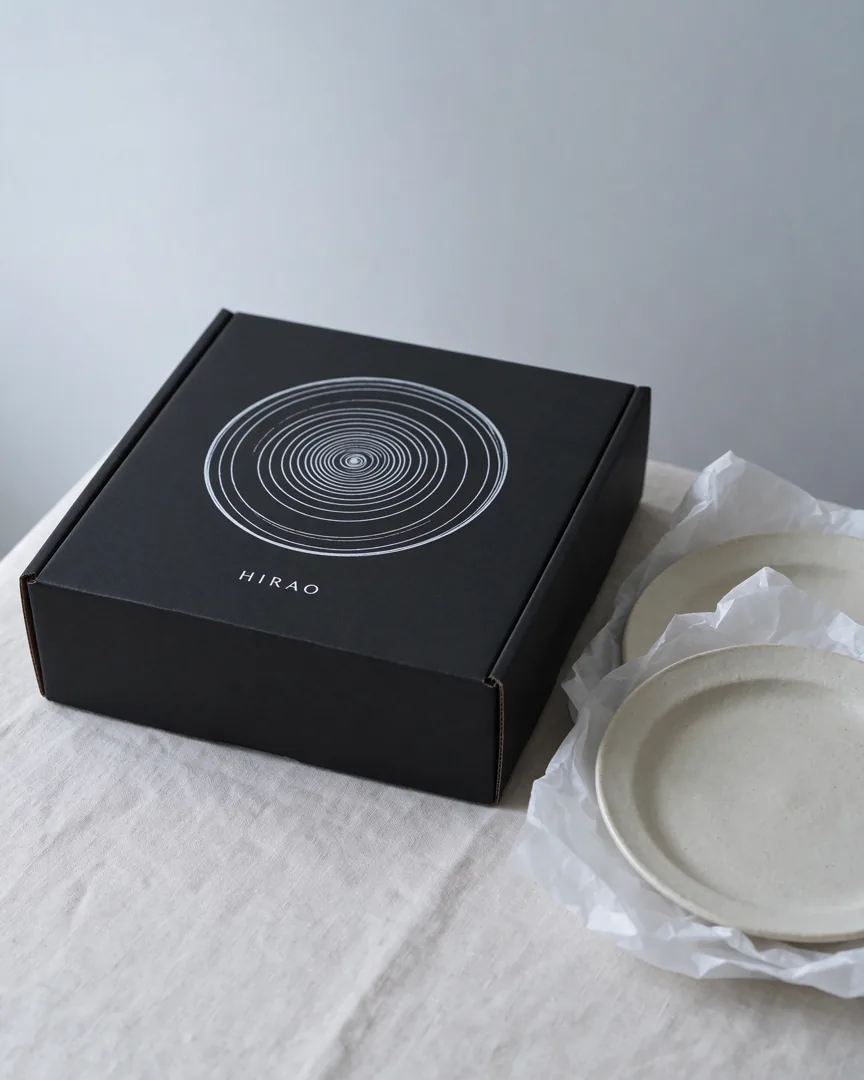
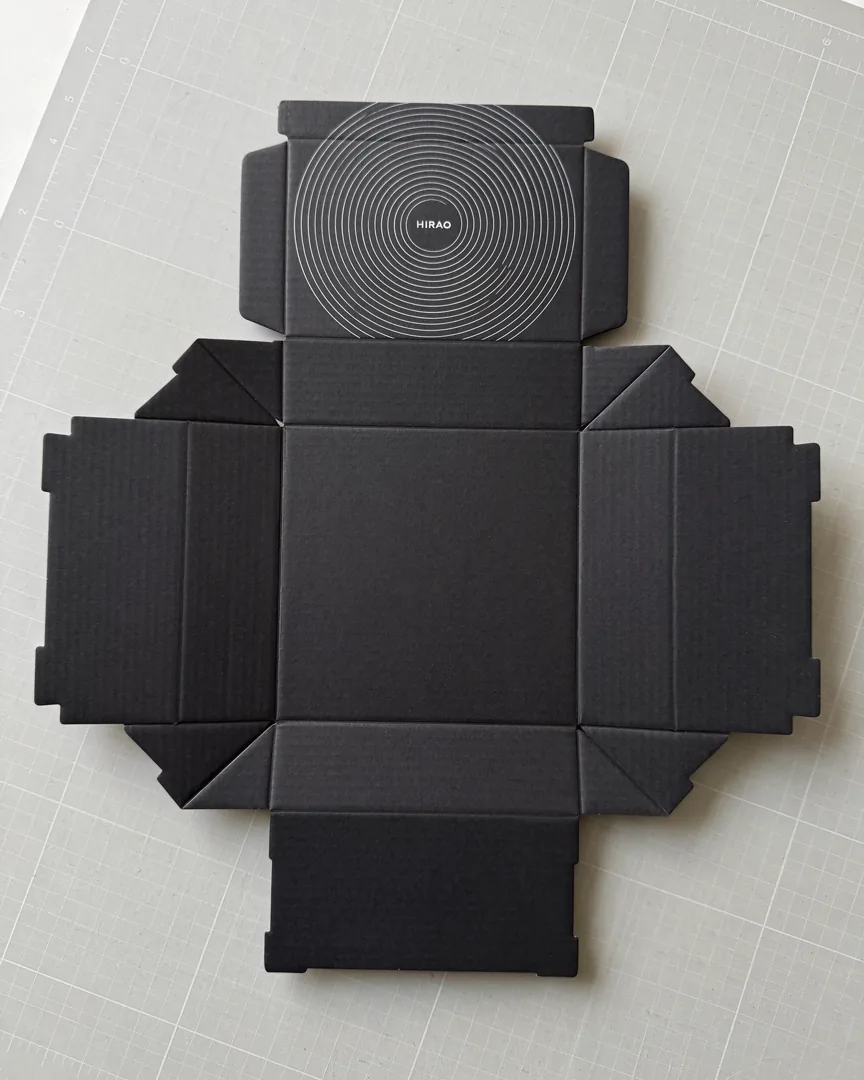
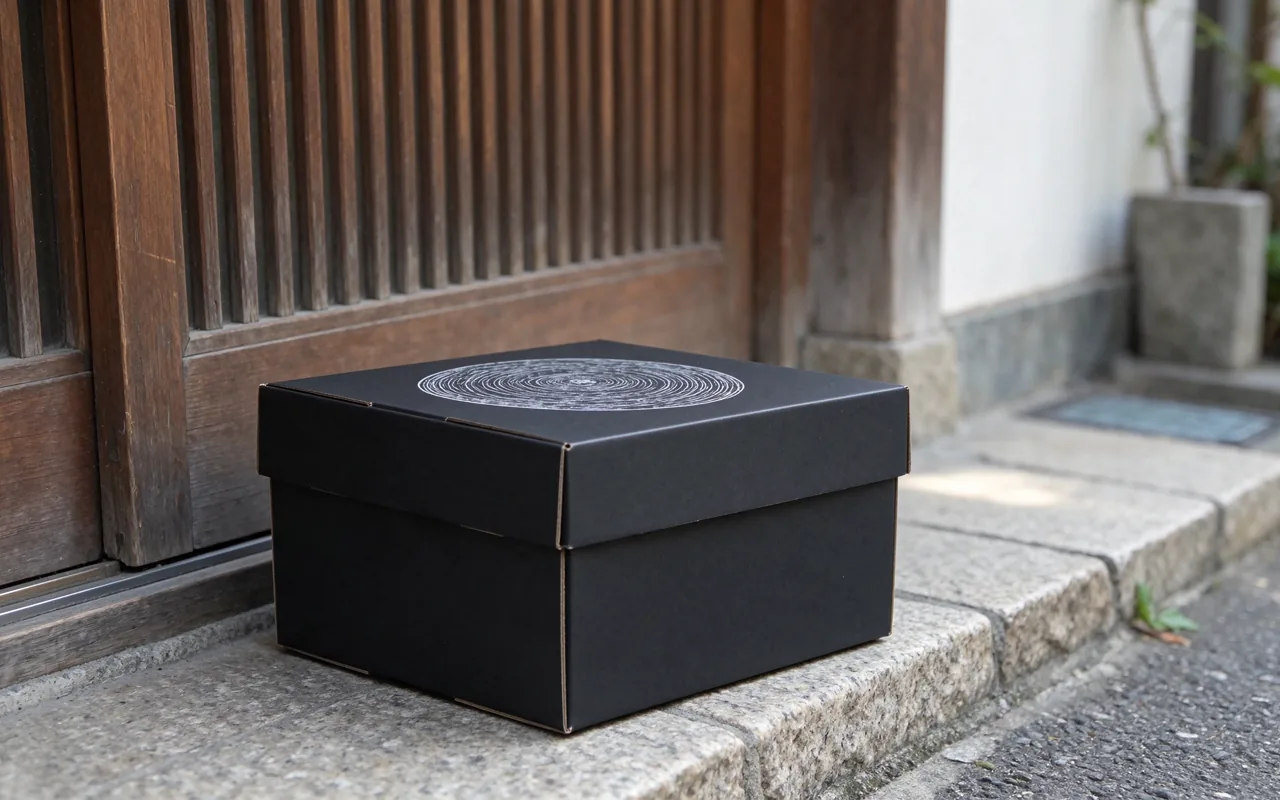
Hirao sells plates online. Each order went out in a brown shipper with a gift box inside, bubble wrap between them and tape round the lot. Customers threw away more than they kept.
One black mailer that is both. A folded cradle holds two plates in paper, the lid tucks in front, and the outside carries a drawing of the plate in section. It arrives as the gift.
The first run of 12,000 sold out in nine days.
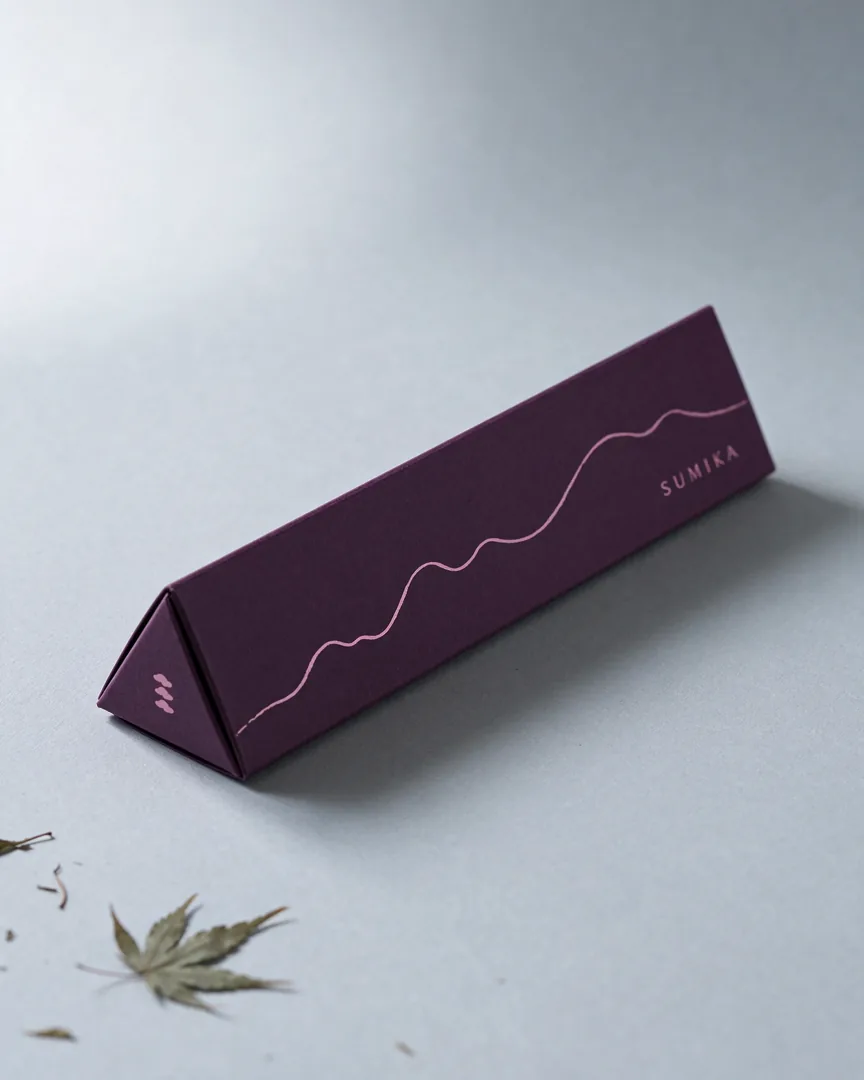
Sumika's sticks are 140 mm long and snap if you look at them. Round tubes rolled off shop counters; flat boxes vanished on the shelf behind taller things.
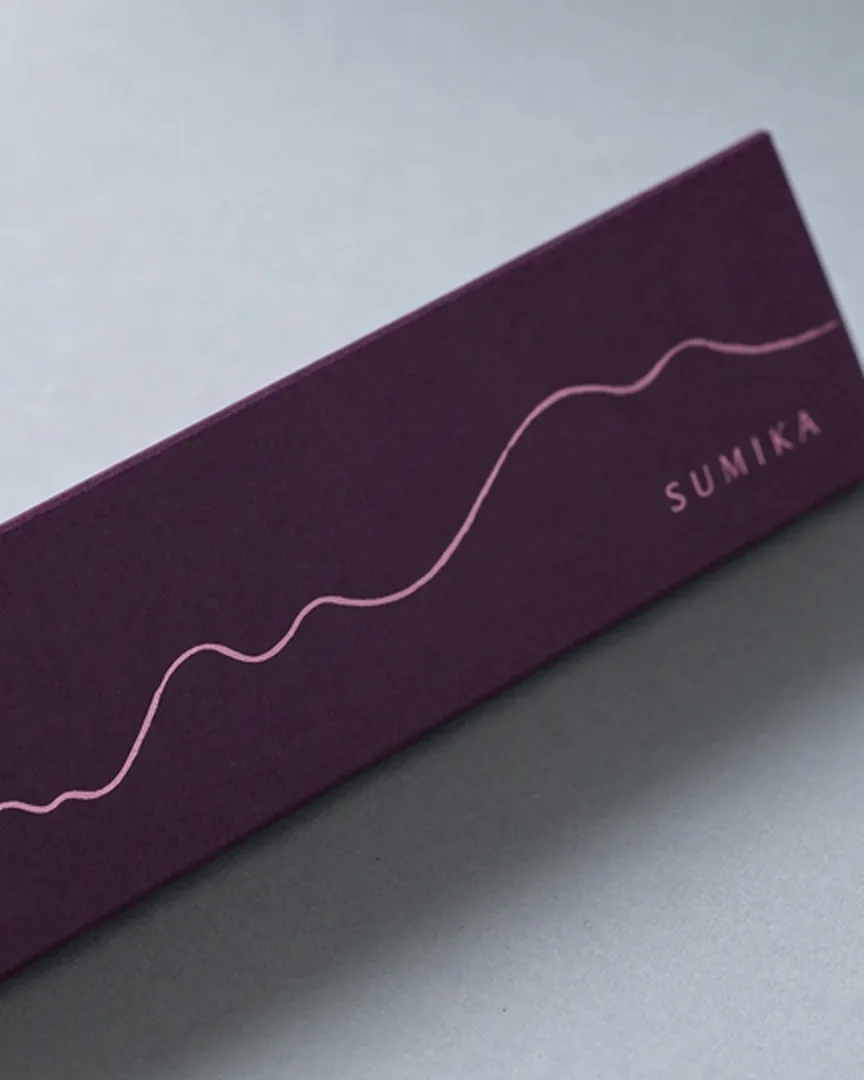
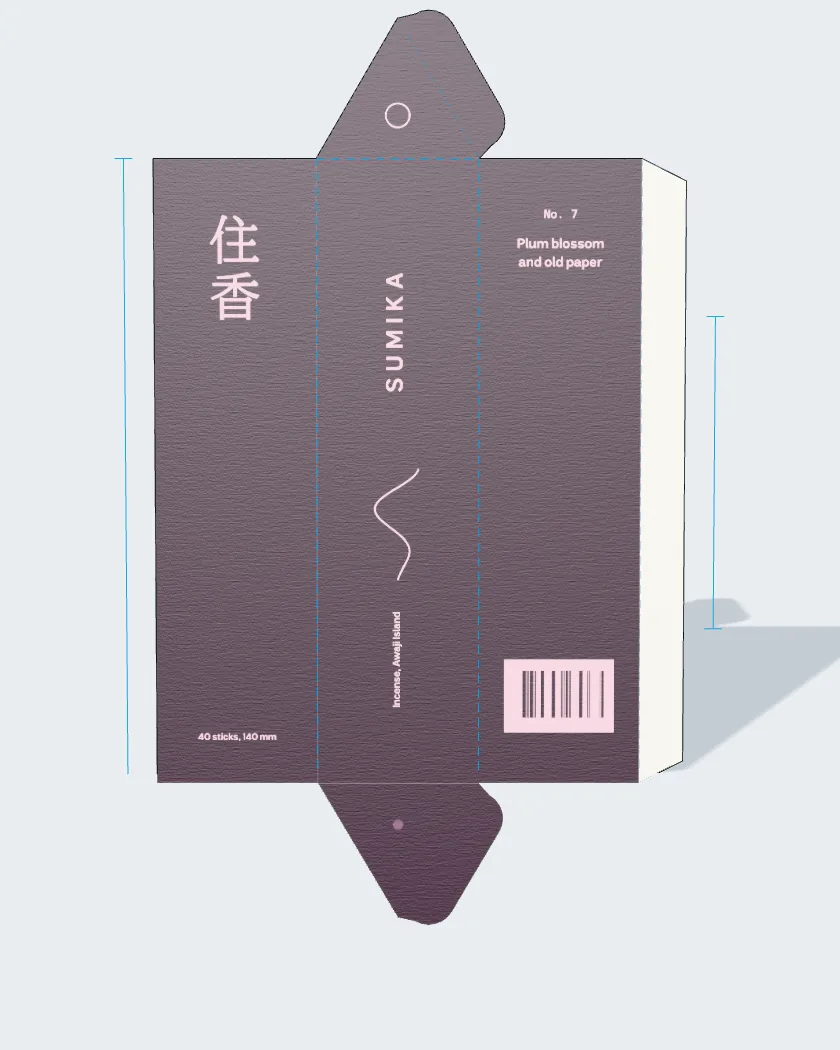
A triangle. It lies on any face and cannot roll, it stands on its end in a cup by the till, and three faces give the name, the scent and the barcode a side each. A single smoke line climbs the front.